👉 Let’s stay connected on social media!
How to Make the Perfect Lemon Lavender Cake with Fresh Zest and Blossoms
QUICK REMINDER:
While we have provided a jump to recipe button, please note that if you scroll straight to the recipe card, you may miss helpful details about ingredients, step-by-step tips, answers to common questions and a lot more informations that can help your recipe turn out even better.
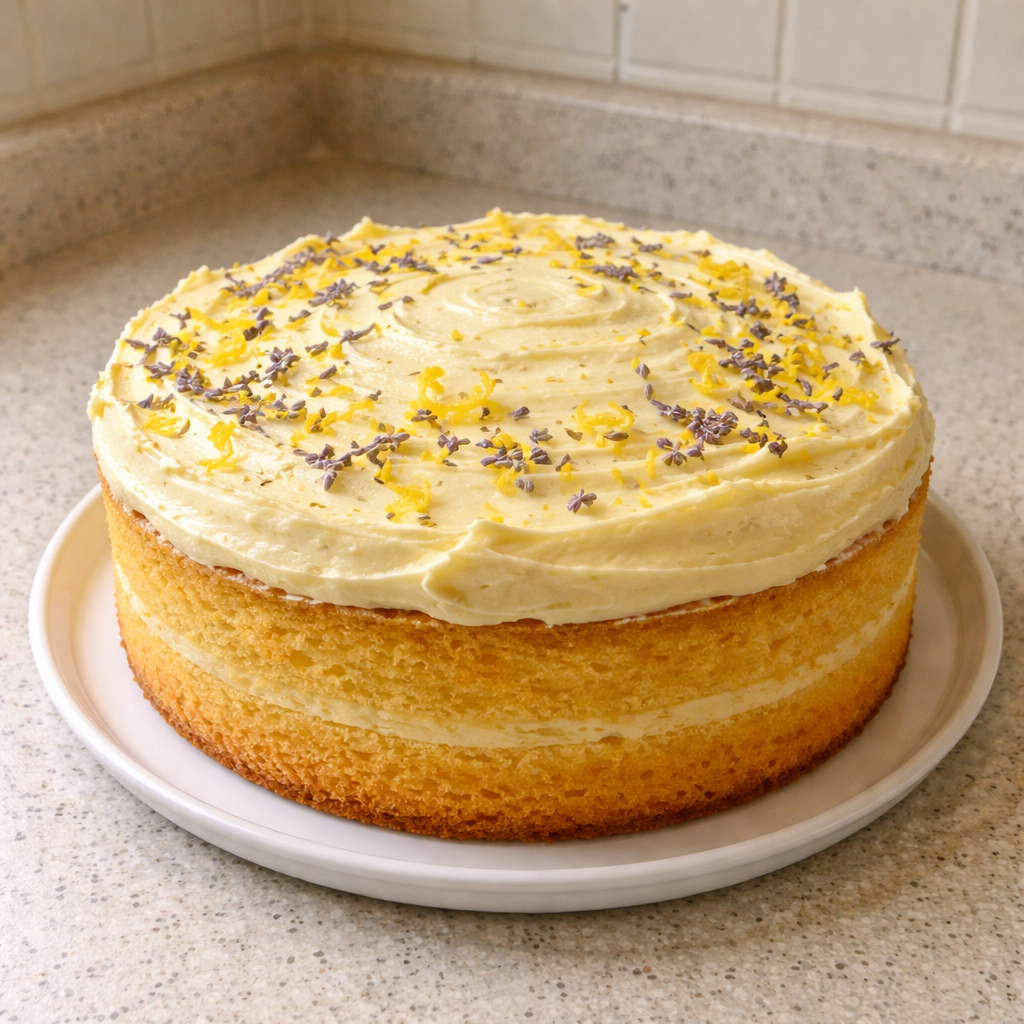
Lemon desserts are a personality trait, actually. We are not the same if you can walk past a lemon cake and feel nothing. Especially right now, when everyone is suddenly obsessed with “clean girl aesthetic” and “soft life” and I’m just over here zesting citrus like it’s my coping mechanism and baking a lemon lavender cake that smells like a spa and a bakery had a baby.
Also, hi, I’m courtney and I do not trust people who say “I don’t like floral flavors” but then drink three iced lavender lattes a day. Be serious. Although, to be fair, I also once swore I hated lavender in desserts and then ate half a cake by myself, so. Growth.
If you’re already into my lemon era, you’ve probably seen the way I over-commit to anything citrus (see also: the time I made that coconut lemon cream baked cod on a Tuesday like that’s normal behavior). This is the cake version of that energy: extra, a little chaotic, somehow still comforting.
The Time I Turned My Lemon Lavender Cake Into a Scented Sponge
Let’s talk about failure, because this lemon lavender situation did not start cute.
Attempt #1: I was cocky. I threw in what can only be described as “a handful” of dried lavender. Do you know what a handful of lavender smells like baked into a cake? Like you frosted a linen closet. The whole kitchen smelled like fancy soap and sadness. The texture wasn’t even bad, which made it worse. It was this soft, fluffy, perfectly yellow cake that tasted like I licked a candle.
My sister took one bite, made prolonged eye contact with me, and very gently said, “I…just brushed my teeth?” Accurate.
Attempt #2, I tried to fix it by burying the problem in sugar. I made a glaze so sweet it actually squeaked against the knife when I cut it. The lavender was still screaming underneath. The crumb felt weirdly bouncy, like the cake was offended and trying to push back.
At one point I had a pot of milk, dried lavender, lemon peels, two timers going, my phone blaring some podcast about minimalist kitchens (the irony), and a 9-inch pan literally rattling in the oven. The smell was this bizarre mix of day spa and school bake sale and I just stood there wondering why I voluntarily do this.
And then there was the time I forgot to strain the lavender out of the milk. “Maybe the buds will be cute!” they were NOT cute. They were little chewy confetti pieces of regret. You bite into this tender cake and suddenly there’s a tiny purple speed bump in your mouth. Love that for us.
I wish I could say there was a clean turning point where I was like “and THEN I figured it out!” but honestly I mostly rage-scrolled my own photos, ate cereal for dinner, and put the recipe in time-out for a week.
What Finally (Mostly) Fixed This Cake
So this version works. Or, like, 97% works. I still rearrange my feelings about it every time I make it, but that’s just my brand.
What changed:
First, I stopped treating the lavender like a main character. It’s a background extra now. Essential, but quiet. Instead of dumping it straight into the batter, I started steeping it gently in warm milk. Suddenly the lavender wasn’t shouting; it was…humming? It just kind of wraps itself around the lemon instead of karate-chopping your taste buds.
Emotionally, the turning point was the day I admitted this lemon lavender cake is a lemon cake FIRST. Lavender is just the little scarf. Once I leaned into big bright citrus—zest in the batter, juice in the glaze, more zest in the frosting—the whole thing stopped tasting like lotion and started tasting like cake that happens to smell like a calm person lives here.
Practically, it was a thousand tiny adjustments: cutting the baking soda so the crumb stayed tender instead of weirdly soapy, softening the butter properly instead of nuking it (RIP grainy batter), using whole milk because the skim milk version tasted like sadness. Also: chilling the cake layers for a bit before frosting, because warm cake + buttercream = slidey disaster and a meltdown (me, not the cake).
I still side-eye the dried lavender buds every time I pull the bag out. There’s always that tiny fear I’ll overshoot and we’re back to “eating drawer liners.” But the last several rounds have come out soft, fragrant, lemony, just enough floral, and my family stopped making soap jokes, so I’m tentatively calling it a win.
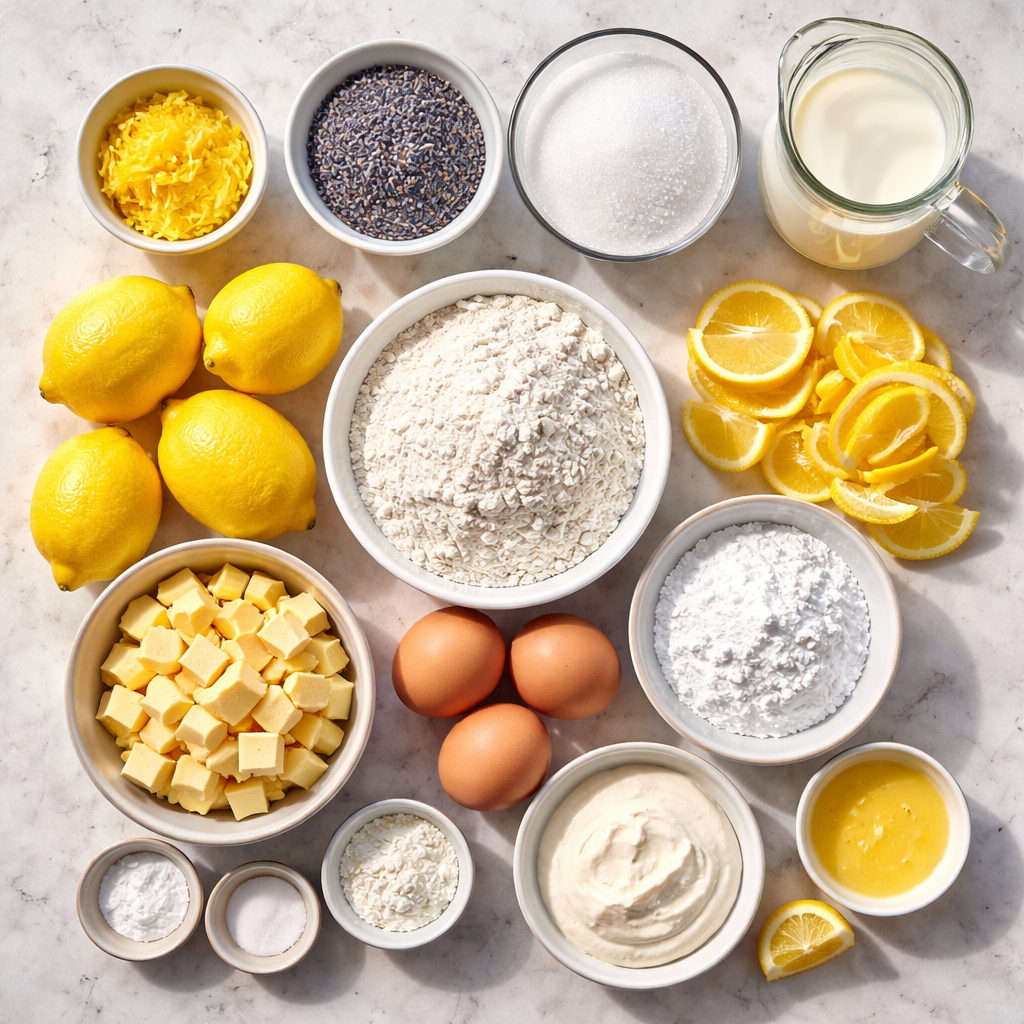
What You Actually Need in the Kitchen
- 2 ½ cups all-purpose flour
- 2 teaspoons baking powder
- ½ teaspoon baking soda
- ½ teaspoon salt
- ½ cup unsalted butter, softened
- 1 ½ cups granulated sugar
- 3 large eggs
- 1 tablespoon finely grated lemon zest (from about 2 lemons)
- ¼ cup fresh lemon juice
- 1 cup whole milk
- 2 tablespoons dried lavender buds (culinary grade)
- 1 teaspoon vanilla extract
For the lemon lavender glaze:
- 1 ½ cups powdered sugar
- 2 tablespoons fresh lemon juice
- 1 tablespoon lemon zest
- 1 tablespoon dried lavender buds (culinary grade)
For the lemon buttercream frosting:
- ½ cup unsalted butter, softened
- 4 cups powdered sugar
- 2 tablespoons heavy cream
- 2 tablespoons fresh lemon juice
- 1 tablespoon lemon zest
- 1 tablespoon dried lavender buds (culinary grade)
- Pinch of salt
If your budget is side-eyeing the dried lavender, I get it—she’s a little high-maintenance—but one small bag lasts forever, and the texture payoff of the cake (soft, tender, very “I bake on weekends” energy) is worth hunting down the good stuff at least once. Or twice. Or until you’re making it instead of birthday cake like I accidentally did.
Okay, But How Do We Not Ruin It This Time
- Preheat the Oven: Preheat your oven to 350°F (175°C). Grease and flour two 9-inch round cake pans or line them with parchment paper.
- Infuse the Lavender: In a small saucepan, heat the milk over low heat. Add the dried lavender buds and steep for about 5 minutes. Remove from heat, let cool, and strain out the lavender buds.
- Mix Dry Ingredients: In a medium bowl, whisk together the flour, baking powder, baking soda, and salt. Set aside.
- Cream Butter and Sugar: In a large bowl, beat the softened butter and granulated sugar together with an electric mixer on medium speed until light and fluffy (about 3–4 minutes).
- Add Eggs, Lemon Zest, and Lemon Juice: Add the eggs one at a time, mixing well after each addition. Then mix in the lemon zest, lemon juice, and vanilla extract.
- Combine Wet and Dry Ingredients: Gradually add the dry ingredients to the butter mixture, alternating with the lavender-infused milk, starting and ending with the dry ingredients. Mix until just combined.
- Bake: Divide the batter evenly between the prepared cake pans. Bake for 25–30 minutes, or until a toothpick inserted into the center comes out clean.
- Cool: Allow the cakes to cool in the pans for 10 minutes, then turn them out onto a wire rack to cool completely.
- For the Lemon Lavender Glaze: Whisk together powdered sugar, lemon juice, lemon zest, and lavender until smooth and pourable.
- For the Lemon Buttercream Frosting: Beat softened butter until creamy, then gradually add powdered sugar, heavy cream, lemon juice, lemon zest, lavender, and salt until fluffy.
- Assemble the Cake: Place one cooled cake layer on a plate, drizzle with some glaze, add a layer of buttercream, top with the second cake layer, then finish with more glaze and frosting as dramatically as your heart dictates.
Look, if you mix the glaze and frosting steps out of order, nothing explodes. Sometimes I make the glaze first, forget about it, and rediscover it when I’m halfway through frosting, like a citrusy side quest. If your batter looks a bit thick, it’s okay; the lavender milk swoops in and saves it. Just don’t overmix at the end unless you want a tough cake, in which case, that’s between you and your conscience.

You, Me, and the Disaster Zone Kitchen
Be honest: are you also the kind of person who can keep a job, pay taxes, function as a semi-adult, and yet absolutely cannot bake without turning the kitchen into a war zone?
Because every time I make this, there’s lemon zest on the cat (he’s fine), powdered sugar on my jeans, and at least one spatula in the sink I swear I didn’t use. And someone always walks in right at the worst moment, like when I’m tasting frosting off my finger directly over the mixing bowl. Hygiene? Never met her.
If you’re reading this thinking, “But I’m not a baker,” hi, I wasn’t either. I was just a person who once decided that a lazy Sunday needed homemade blueberry buttermilk pancake casserole and suddenly I had Opinions about flour hydration. It happens slowly and then all at once.
Do you also do that thing where you plan to serve dessert after dinner, and then you “just test a slice” of the cake at like 3 PM and suddenly there’s a whole wedge missing and you have to rearrange the plating to hide it? This cake is extremely “I’ll just even out the edge” coded.
Also, if your family/friends/roommates don’t understand the concept of “let it cool completely before frosting,” this is your sign: hide the layers. Put them in the microwave (turned off, obviously) like a cake panic room. Protect the crumb.
Questions You’re Probably Already Googling
Yes, absolutely, and honestly it’s better that way. Bake the layers, let them cool completely, then wrap them tightly in plastic and stash in the fridge for up to 2 days or in the freezer for up to a month. Frosting and glaze can be made the day before and kept chilled; just let the buttercream come back to room temp and re-whip it so it’s not sad and stiff.
Not if you follow the amounts here and actually strain the milk (learn from my chaos). It’s a gentle floral thing in the background, more like “this smells expensive” than “I’m chewing on potpourri.” If you’re nervous, you can even dial the lavender back by half the first time.
As long as it specifically says “culinary” or “food grade,” you’re good. Don’t use the stuff meant for bath soaks or sachets; that’s usually way more perfumey and weirdly bitter. If it smells like something you’d keep in your underwear drawer, maybe don’t bake with it.
You can bake it in a 9×13 pan and call it a day. The bake time will be a little longer—start checking around 30 minutes—then just glaze and frost the top like a sheet cake. No one has ever been mad about that.
You can, and it turns into this light, tea-party style cake that’s less sweet and more snack-y. I personally like the full frosting-glaze drama, but if you’re not a frosting person (cannot relate, but I respect it), glazing only is totally fine.
There’s something ridiculously tender about cutting into this cake the next day, when the lemon has settled down and the lavender is just barely there, and the whole kitchen smells like you have your life together when you very much do not. And maybe you’re eating it for breakfast with coffee, and maybe you’re also eyeing the leftover frosting and thinking about making cinnamon roll pancakes tomorrow, and maybe that’s too much but also maybe it isn’t.
I always think I’m going to slice it neatly, serve it on actual plates, be a composed person who hosts things. And then someone forks a piece straight off the cake stand and we’re all standing around the counter talking about nothing and everything, and there’s a smear of lemon buttercream on the cutting board, and—hold on, my timer just went off and I think I left the milk on the stove again…
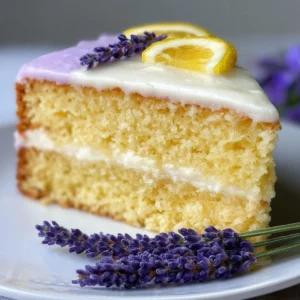
Lemon Lavender Cake
A soft and fragrant lemon lavender cake that beautifully balances citrusy brightness with a subtle floral note, perfect for any occasion.
Ingredients
Cake Ingredients
- 2 ½ cups all-purpose flour
- 2 teaspoons baking powder
- ½ teaspoon baking soda
- ½ teaspoon salt
- ½ cup unsalted butter, softened Bring to room temperature
- 1 ½ cups granulated sugar
- 3 large eggs
- 1 tablespoon finely grated lemon zest From about 2 lemons
- ¼ cup fresh lemon juice
- 1 cup whole milk Infused with lavender
- 2 tablespoons dried lavender buds (culinary grade)
- 1 teaspoon vanilla extract
Lemon Lavender Glaze
- 1 ½ cups powdered sugar
- 2 tablespoons fresh lemon juice
- 1 tablespoon lemon zest
- 1 tablespoon dried lavender buds (culinary grade)
Lemon Buttercream Frosting
- ½ cup unsalted butter, softened
- 4 cups powdered sugar
- 2 tablespoons heavy cream
- 2 tablespoons fresh lemon juice
- 1 tablespoon lemon zest
- 1 tablespoon dried lavender buds (culinary grade)
- 1 pinch salt
Instructions
Preparation
- Preheat your oven to 350°F (175°C). Grease and flour two 9-inch round cake pans or line them with parchment paper.
- In a small saucepan, heat the milk over low heat. Add the dried lavender buds and steep for about 5 minutes. Remove from heat, let cool, and strain out the lavender buds.
- In a medium bowl, whisk together the flour, baking powder, baking soda, and salt. Set aside.
Mixing
- In a large bowl, beat the softened butter and granulated sugar together with an electric mixer on medium speed until light and fluffy (about 3–4 minutes).
- Add the eggs one at a time, mixing well after each addition. Then mix in the lemon zest, lemon juice, and vanilla extract.
- Gradually add the dry ingredients to the butter mixture, alternating with the lavender-infused milk, starting and ending with the dry ingredients. Mix until just combined.
Baking
- Divide the batter evenly between the prepared cake pans. Bake for 25–30 minutes, or until a toothpick inserted into the center comes out clean.
- Allow the cakes to cool in the pans for 10 minutes, then turn them out onto a wire rack to cool completely.
Glaze and Frosting
- For the Lemon Lavender Glaze: Whisk together powdered sugar, lemon juice, lemon zest, and lavender until smooth and pourable.
- For the Lemon Buttercream Frosting: Beat softened butter until creamy, then gradually add powdered sugar, heavy cream, lemon juice, lemon zest, lavender, and salt until fluffy.
Assembly
- Place one cooled cake layer on a plate, drizzle with some glaze, add a layer of buttercream, top with the second cake layer, then finish with more glaze and frosting as desired.
Notes
For best results, allow cake layers to cool completely before frosting to avoid sliding. The lavender flavor is gentle; feel free to adjust the amount if desired.