👉 Let’s stay connected on social media!
How to Make Perfectly Irresistible Beignet Squares at Home
QUICK REMINDER:
While we have provided a jump to recipe button, please note that if you scroll straight to the recipe card, you may miss helpful details about ingredients, step-by-step tips, answers to common questions and a lot more informations that can help your recipe turn out even better.
I fully believe there are “fancy desserts” and “gremlin desserts,” and I am loyal—ride-or-die loyal—to the gremlin category. The things you eat over the sink, powdered sugar on your shirt, iced coffee sweating next to the mess.
Which is why every time someone posts a perfectly lit, perfectly symmetrical stack of beignet squares on Instagram, I feel both inspired and personally attacked. Like yes, I will be making those. And no, mine will not look like that. This is not a bakery, this is a house where someone just stepped on a Lego and we’re out of foil.
Anyway. Beignets are having a moment again (we recycle trends now; it’s sustainable), so here we are. You and me and a bowl of dough that might save your Tuesday or might glue itself to your countertop.
Let’s be optimistic.
The Time My Beignet Dough Stuck to the Countertop
The first time I tried to make these, the dough sounded… wet. You know that sad, slapping sound when you stir too much liquid into something and it goes from “soft and pillowy” to “I’ve made paste for kindergarteners”? That.
I remember the smell was actually incredible—like warm vanilla and fried dough carnival vibes—but the texture? Imagine a throw pillow that’s been through three wash cycles and never fully dried. Kind of sour, kind of dense, kind of “is this safe?”
I’d followed a recipe “exactly,” which in my world means I skimmed it once, decided I probably knew better, doubled the vanilla, and eyeballed the flour like some sort of chaos fairy. The dough stuck to my hands, to the bowl, to the counter, to my soul. I kept tossing flour at it like I was trying to perform an exorcism. It squeaked when I kneaded it—like little rubbery squeaks. Should dough squeak? I don’t think so?
I cut them into squares (well, “squares,” geometry is not welcome here) and threw them into oil that was… not hot enough. They sank like tiny beige regrets. Instead of puffing, they just kind of… simmered. Soft bubbles, no drama. Not what we want.
The whole kitchen smelled like a fairground married a pancake house, which was the only good part. The beignets came out pale and weirdly shiny, and when I bit one, it had this gummy center that fought back. Absolutely not. The powdered sugar on top tried to lie to me—look, I’m cute!—but no. I know what you are.
Anyway, I threw most of them away, ate two out of spite, and then avoided this recipe for months like it owed me money.
What Finally Clicked (Sort Of) With These
So what changed? Honestly, not that much and also everything. Emotionally: I stopped trying to impress anyone. These beignet squares were no longer “for the internet.” They were for me and my unwashed ponytail and the neighbor kid who randomly shows up exactly when food is done. Every time. Like a carb bat signal.
Practically: I tightened things up. Less liquid, more intention. Also, I finally accepted that dough is allowed to be a little messy. I kept making it too wet because I was afraid of “dry” pastries, which is hilarious because this version turns out soft, thick, and puffy when you just… follow the amounts. Wild concept.
Using baking powder instead of yeast helps too, because I do not have the patience to negotiate with dough that needs emotional support and proofing time. These beignet squares are more like, “stir, roll, fry, sugar, goodbye” which is the energy I need in a dessert.
I also stopped over-mixing the batter into oblivion. Once the wet hits the dry, you stir until it’s just combined, and then you walk away. Or don’t walk away, because time isn’t real, but you get it. Lumps are okay. Imperfection is okay. If it looks like dough and not soup, you’re winning.
Do I trust this recipe 100%? Honestly, like 93%. I still have a little flashback every time I pour milk into the bowl like, “Is this when it all goes wrong again?” But it hasn’t. Not once. They keep coming out like soft little fried pillows, and every time I think, huh, maybe I do know what I’m doing. For at least eight minutes.
What You Actually Need to Make These Squares of Chaos
- 2 cups all-purpose flour
- 2 teaspoons baking powder
- 1/2 teaspoon salt
- 1/4 cup sugar
- 1/2 cup milk
- 2 large eggs
- 1/4 cup melted butter
- Vegetable oil for frying
- 1 cup powdered sugar
- 1 teaspoon vanilla extract
- 1 tablespoon milk (for glazing)
You don’t need fancy flour, you don’t need “artisan” anything, you definitely don’t need a stand mixer (unless you want to show off to your own reflection). Store brand is fine. The dough doesn’t care. The oil cares a little—use something neutral, not olive oil unless you like your beignet squares with a side of “why does this taste like salad?”

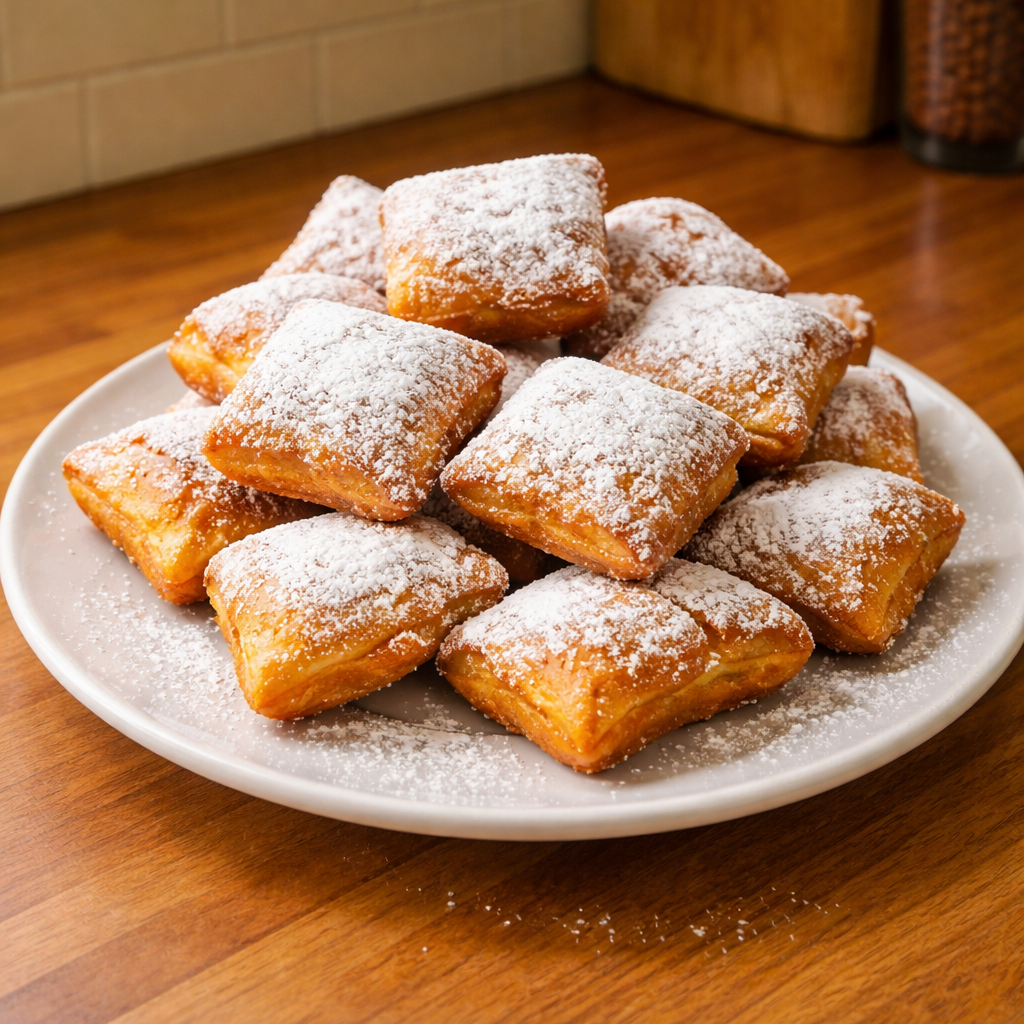
If you’re on a budget, the only mildly splurge-y thing would be good vanilla, but also, live your life. Cheap vanilla + lots of powdered sugar = nobody notices. Texture-wise, these lean thick and soft, not airy and hollow, like a bakery donut that decided to be a little square and dramatic.
Okay, Here’s How I Don’t Ruin Them Anymore
- In a large bowl, mix together the flour, baking powder, salt, and sugar.
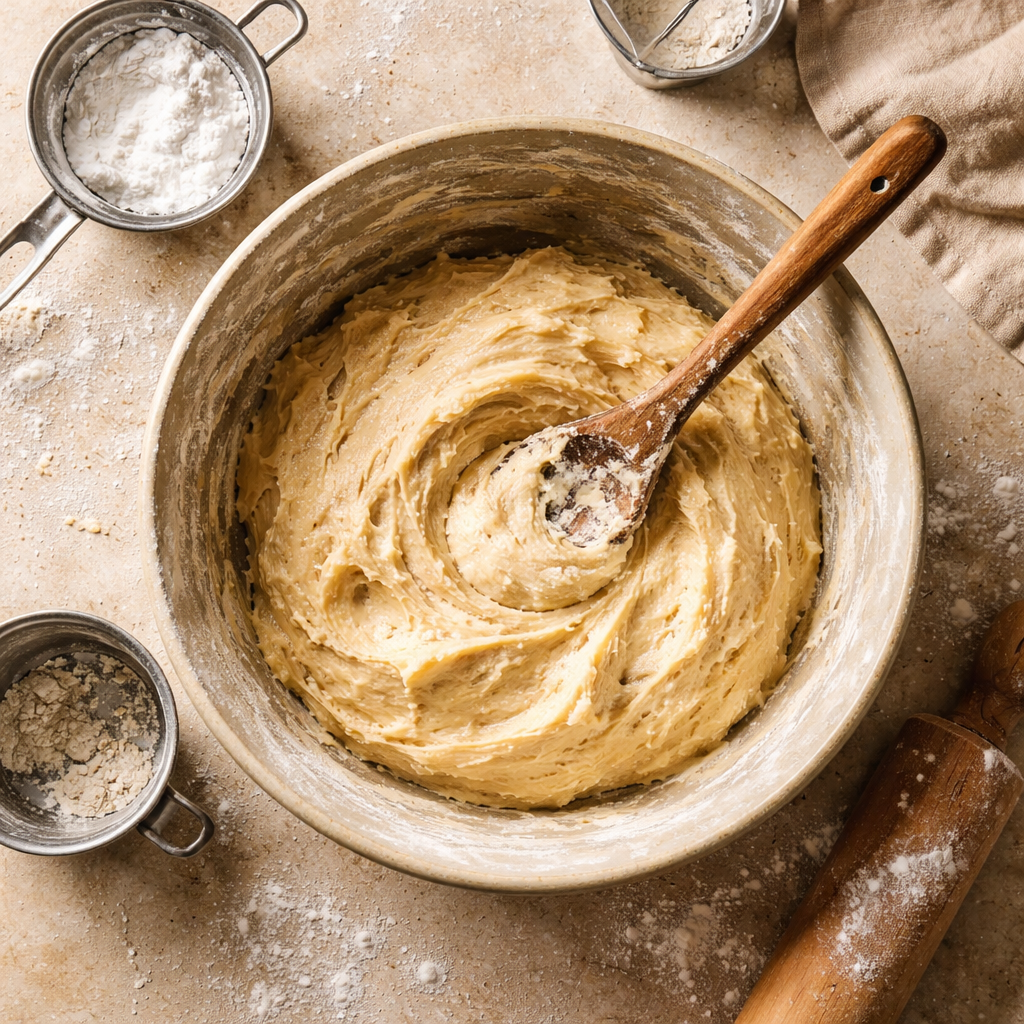
- In another bowl, whisk together the milk, eggs, and melted butter. Pour the wet ingredients into the dry ingredients and mix until just combined.
- Turn the dough out onto a floured surface and knead gently until smooth.
- Roll out the dough to about 1/2 inch thick and cut into squares.
- In a deep pot, heat vegetable oil to 360°F (182°C). Fry the dough squares in batches until golden brown on both sides, about 2-3 minutes per side. Remove and drain on paper towels.
- For the glaze, mix powdered sugar, vanilla extract, and milk until smooth. Drizzle or dip the warm beignet squares into the glaze.
- Enjoy your soft, thick, bakery-style beignet squares!
The non-linear version: mix dry stuff, mix wet stuff, marry them, but don’t overthink it. The dough will look a little shaggy at first—this is fine, we are all a little shaggy. When you knead, it’s more like patting it into submission than full-on bread therapy. If it sticks to everything, add a dusting of flour; if it cracks like desert floor, you went too far, but honestly they’ll still fry up okay.
Rolling to 1/2 inch thick feels illegal because it looks too chubby, but that’s where the puff happens. THICK DOUGH = CLOUD INTERIOR. Cut “squares” with a knife or pizza cutter (I always forget where my knives are, but the pizza cutter is somehow always on the counter??).
Oil temperature is the only thing I’ll be slightly bossy about: 360°F is your friend. No thermometer? Toss in a tiny scrap of dough—if it sinks, then lazily bobbles up, not ready. If it goes dark in like 10 seconds, TOO MUCH, turn it down. Aim for a gentle but confident sizzle.
And please, for the love of your ceiling, don’t drop wet dough into hot oil. Dry your hands. Use a slotted spoon or tongs. This is food, not a science fair explosion.
Let’s Talk Like We’re in the Comments
Be honest: are you here because you actually want beignet squares or because you just needed to scroll through someone else’s kitchen chaos to feel less alone? Both are valid.
Have you ever tried frying something and halfway through been like, “Why is this taking 40 years and why does my whole house smell like a state fair?” Same. I swear the smell lingers for three days and somehow gets into your hair. Worth it, but still.
If you’re thinking, “Courtney, I am scared of hot oil,” SAME, but also, you’ve done harder things. You’ve replied to work emails. You’ve gone to the grocery store hungry and survived the aftermath. You can stand a couple feet back with tongs.
Also, if your first batch looks weird—too pale, too dark, kind of misshapen—just call them “rustic” and move on. No one has ever refused fried dough because the corners weren’t perfect 90-degree angles. That’s not a real problem.
Tell me in your head (or in real life, I guess): are you a heavy glaze person or a powdered sugar avalanche person? I thought I was Team Powdered Sugar forever, but the glaze on these? It clings. It gets into the little edges. It makes them taste like cake donuts that went to New Orleans once and won’t stop talking about it.
Questions You Might Be Thinking But Not Saying Out Loud
Sort of. Since this is baking-powder-based and not yeast-driven, it’s happiest when you mix and fry in the same general timeframe. You can cover the dough and chill it for a few hours if life happens (it always does), but don’t leave it overnight. The leavening gets tired, like the rest of us, and you’ll lose some puff.
Need? No. Will it make your life less chaotic? Yes. But if you don’t have one, just use the “test scrap” method: drop a tiny bit of dough in. You want an immediate, enthusiastic sizzle and gentle browning in about 2–3 minutes, not a deep-fry crime scene.
You can, but then they’re not really beignets anymore—they’re more like sweet little pillow biscuits who wish they were doughnuts. If you go that route, brush with melted butter and bake at 400°F until golden, then glaze. Still good, just different vibes.
First of all, bold of you to assume there will be leftovers. But if you have self-control (teach me), let them cool completely, then store in an airtight container at room temp for up to a day. Rewarm in the oven or air fryer for a few minutes. The glaze will get a little melty again, which honestly just makes them taste fresh.
Absolutely. Shake them in a bag with powdered sugar like it’s 1997 and you’re making shake-and-bake chicken. Classic, messy, perfect with coffee. I like a very thin glaze plus a dusting of sugar when I’m feeling unhinged and in need of maximum chaos.
I always think I’m making these “for the kids” or “for guests” or “for the blog,” and then I’m standing in the kitchen at 10 p.m., powdered sugar fingerprints on my phone, eating a slightly too-hot beignet square over the sink so I don’t dirty a plate, like that somehow cancels out the frying.
There’s something really comforting about a dessert that doesn’t ask you to be delicate or precise or calm. You roll, you cut, you fry, you glaze, you snack. And maybe you burn one, and one is weirdly shaped, and one falls on the floor and the dog gets it, and somehow that feels more honest than anything that would show up on a bakery shelf—

Beignet Squares
Deliciously soft, thick, and puffy beignet squares, perfect for indulging over the sink or enjoying with friends.
Ingredients
Dry Ingredients
- 2 cups all-purpose flour Store brand is fine.
- 2 teaspoons baking powder
- 1/2 teaspoon salt
- 1/4 cup sugar
Wet Ingredients
- 1/2 cup milk
- 2 large eggs
- 1/4 cup melted butter
- 1 teaspoon vanilla extract Using good vanilla enhances flavor.
- 1 tablespoon milk for glazing Adds smoothness to the glaze.
For Frying
- vegetable oil Vegetable oil for frying Use a neutral oil; avoid olive oil.
For Glaze
- 1 cup powdered sugar For dipping or drizzling on warm beignet squares.
Instructions
Preparation
- In a large bowl, mix together the flour, baking powder, salt, and sugar.
- In another bowl, whisk together the milk, eggs, and melted butter.
- Pour the wet ingredients into the dry ingredients and mix until just combined.
- Turn the dough out onto a floured surface and knead gently until smooth.
- Roll out the dough to about 1/2 inch thick and cut into squares.
Frying
- In a deep pot, heat vegetable oil to 360°F (182°C).
- Fry the dough squares in batches until golden brown on both sides, about 2-3 minutes per side.
- Remove and drain on paper towels.
Glazing
- For the glaze, mix powdered sugar, vanilla extract, and milk until smooth.
- Drizzle or dip the warm beignet squares into the glaze.
Notes
If the dough seems too wet, add a dusting of flour. If it sticks, that's okay; this recipe is all about embracing messiness. Can be baked at 400°F for a different take, just prepare for a 'pillow biscuit' texture.