👉 Let’s stay connected on social media!
How to Make Perfectly Holey Ciabatta Bread at Home
QUICK REMINDER:
While we have provided a jump to recipe button, please note that if you scroll straight to the recipe card, you may miss helpful details about ingredients, step-by-step tips, answers to common questions and a lot more informations that can help your recipe turn out even better.
Belief: store-bought “artisanal” bread is a scam and I will die on this hill. If it comes in plastic and crackles like sadness when you squish it, no. I’m not paying eight dollars for something that tastes like a paper towel roll with ambitions.
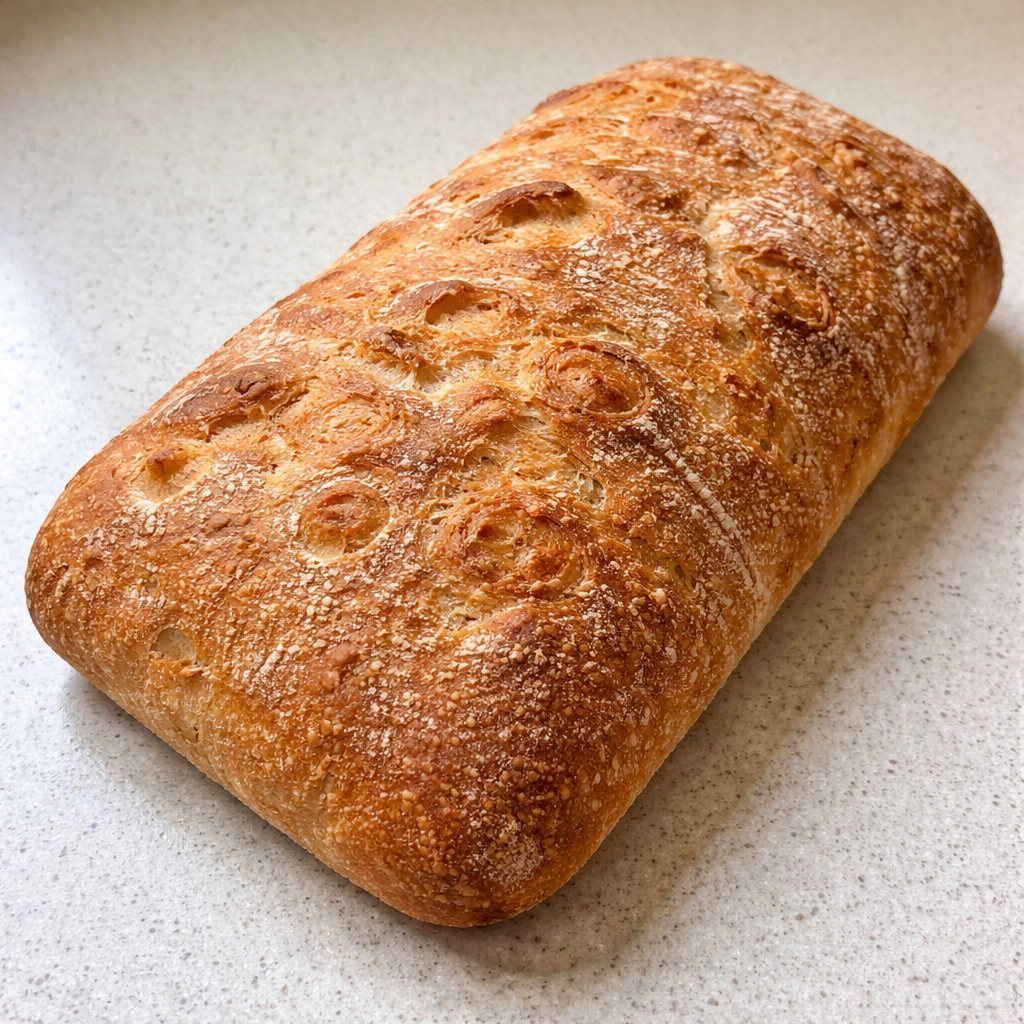
We’re in this weird cultural moment where everyone is either making sourdough from a 9-year-old starter named Kevin or they’re like “I heated a tortilla over the stove, does that count as cooking?” and honestly, same. That’s exactly why I keep boomeranging back to ciabatta bread. It’s the chaotic middle child of bread: wildly hole-y, kind of dramatic, looks like it woke up late. My people.
If you’re here because you got mad at the price of a sandwich at a café and thought “I can do that,” welcome. Pull up a chair, or lie on the floor and read this on your phone like a raccoon. I’ve baked this bread in between Zoom calls, while ignoring texts, and once while also making banana bread brownies because I apparently hate myself and love carbs.
The era when my ciabatta bread dough sounded like wet sneakers
The first time I tried this, my dough made a sound. Dough should not make sounds. It slapped the bowl like… have you ever pulled your foot out of a muddy field? That suction-y, squeaky “schlup”? That. But wetter. Somehow.
I remember thinking, “Hydrated dough is good, right? Everyone on the internet says ‘high hydration’ in that smug way,” while I was basically stir-frying glue. It smelled like wet flour and existential dread. I kept poking it, hoping it would suddenly become silky and stretchy like everyone’s gorgeous overhead videos, but it just stuck to my fingers and also my watch band and also my soul.
At one point I dropped the bowl (lightly, but still) and the dough just jiggled, like an old mattress. No bounce, no life, just resignation. The bottom was this cold, dense sludge that hadn’t even met the yeast yet. They were living separate lives.
Then I tried to “shape” it, which is generous, because what actually happened is: I poured the blob onto my counter, dusted with flour like a contestant on a baking show who clearly lied on her application, and attempted to convince it to become two loaves. It spread out like it was trying to escape the relationship. I used a bench scraper like a tiny sword. It laughed at me.
The smell while it baked? Not terrible, honestly, like toast and optimism. But the sound when I knocked the bottom after? Thud. Not the hollow “I’m done!” thwack, more like tapping the side of an overfilled suitcase. It sliced like a dense cake, no big airy holes, just uniform, chewy sadness. My kids dipped it in sauce and were like, “It’s… fine?” which hurt worse than if they’d spit it out.
And I wish I could say, “Then I learned and everything was perfect,” but actually? I just angrily made grilled cheese with it and pretended that was the plan.
Why this version doesn’t ruin my day (usually)
So here’s what changed: I stopped trying to make influencer bread and started trying to make bread I wouldn’t throw across the kitchen. That’s it. Emotional growth via carbs.
Practically, I finally respected two things: salt and patience. Emotionally, I admitted I am not a loaf-of-the-week person. I do not need six complicated stretch-and-fold steps on a timer that dings more than my email. I need: mix, knead, walk away, come back when I remember.
With this ciabatta bread, I started paying attention to the dough feeling right instead of obsessing over whether it matched the vibe of someone’s perfectly lit video. I learned that “shaggy dough” is not code for “pourable pancake batter.” And also that if the dough is crawling up your arms, maybe throw in a pinch more flour and stop suffering for aesthetics.
The little realizations stacked up: warm-but-not-hot water so you don’t yeet your yeast into the afterlife; actually letting it double instead of poking it every six minutes; trusting that a sticky dough doesn’t mean you’ve failed as a baker and also as a person.
Now, when it comes out of the oven, the crust does that quiet crackle as it cools, and I swear my blood pressure goes down. Most of the time it’s lacy and open inside, perfect for olive oil and salt or for the kind of sandwich that drips down your wrists. But I still get a slightly too-dense loaf sometimes. And weirdly? I kind of like that about it. There’s always this tiny doubt—will it be perfect? Will it be “fine”? Keeps things spicy.
What you actually need in the house
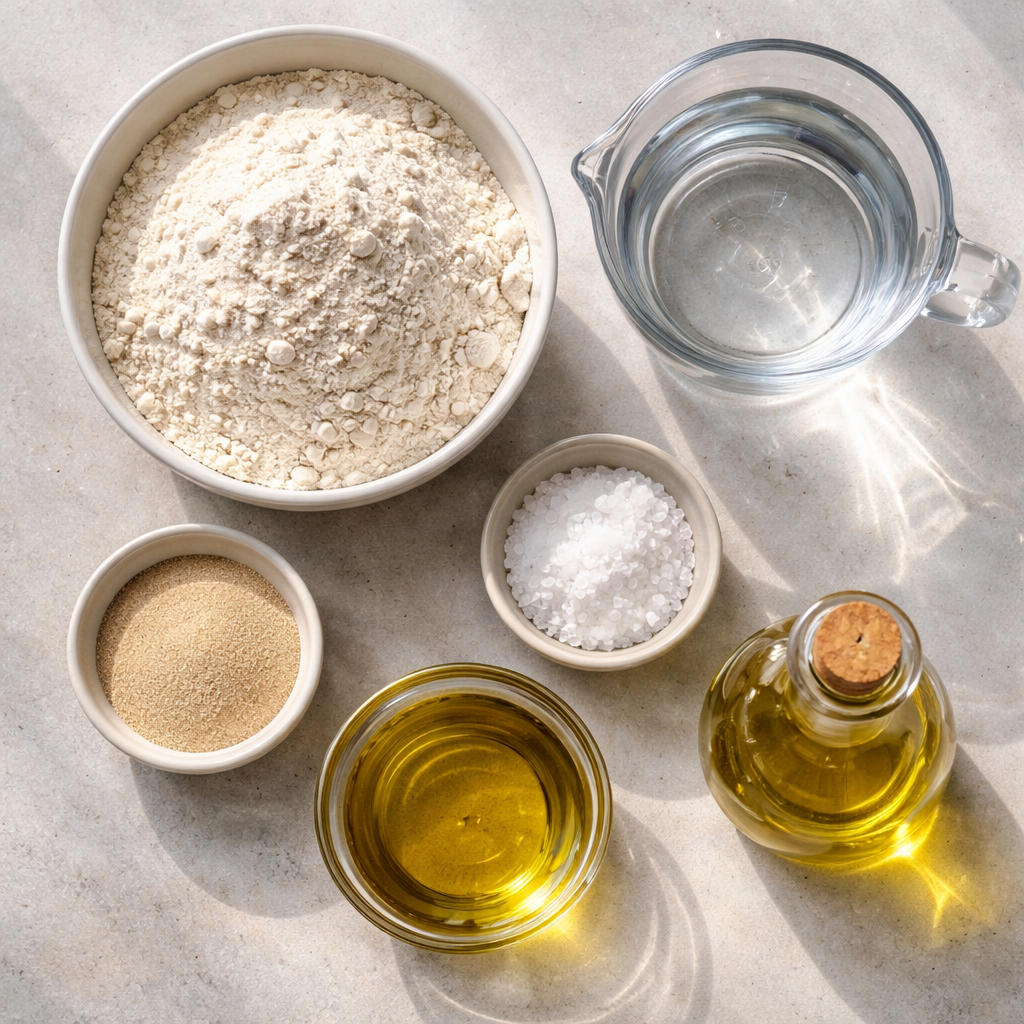
- 4 cups all-purpose flour (500g)
- 1 ½ tsp instant yeast (5g)
- 1 ¾ cups warm water (410ml)
- 2 tsp salt (10g)
- 3 tbsp extra virgin olive oil (45ml)
You can get all this at the normal grocery store, no specialty nonsense. The flour can be the cheap store brand, I promise this bread does not check labels. Olive oil quality matters a little for flavor, but if all you have is the big plastic jug your aunt gave you three holidays ago, we’re not canceling the bake for that. This is not a finance blog but this is also way cheaper than your weekly “treat myself” sandwich situation, especially if you’re also baking something like chocolate espresso banana bread and pretending it’s meal prep.
How this goes down in my kitchen (loosely, chaotically)
- In a large mixing bowl, combine flour and salt. In another bowl, dissolve yeast in warm water.
- Gradually mix the yeast mixture into the flour until a shaggy dough forms.
- Knead on a floured surface for about 10 minutes until smooth.
- Place dough in a greased bowl, cover, and let rise for about an hour or until doubled.
- Punch down the dough, divide it into two pieces, and shape each into an oval loaf.
- Let loaves rise on a parchment-lined baking sheet for another 30-45 minutes.
- Preheat oven to 425°F (220°C), drizzle loaves with olive oil, sprinkle with sea salt, then bake for 20-25 minutes until golden brown.
Okay BUT in real life, here’s how it actually feels:
You dump the flour and salt together, whisk like you know what you’re doing, then immediately question your bowl size. (Use the bigger bowl. Always.) The yeast in warm water should look creamy and slightly foamy, not like weird clumpy pond water. If nothing happens after 10 minutes, your yeast is probably dead; offer condolences and start over.
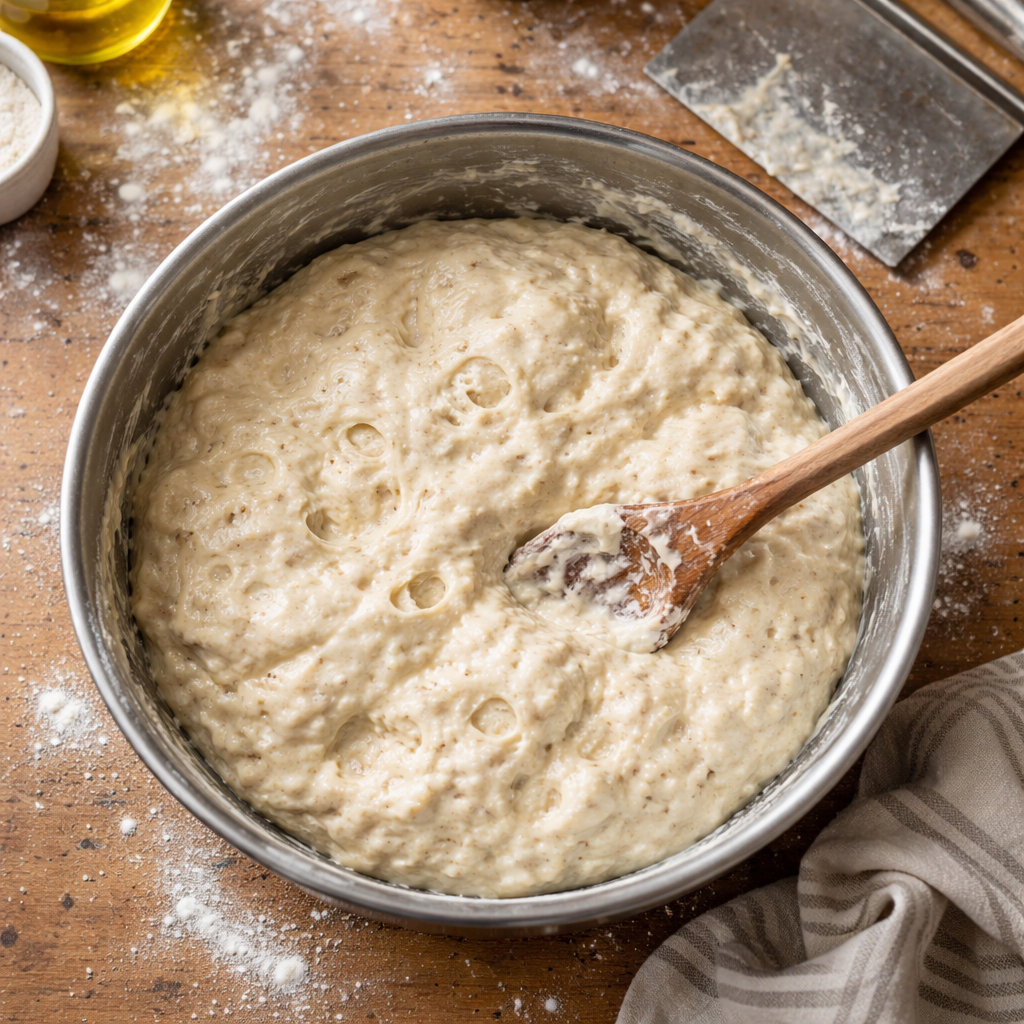
When it says “shaggy dough,” we mean: messy, streaky, all flour is wet but it’s not smooth yet. If it’s violently sticking to everything, add a sprinkle of flour. If it’s stiff and sulking, dribble in more water. CIABATTA LIKES MOISTURE. (Sorry for the word.)
During kneading, it goes from “I regret this” to “oh wait this is kind of therapeutic.” Push with the heel of your hand, fold, turn, repeat, zone out, think about everything and nothing. If you’re tired at minute six, same, but try to get close to ten so the gluten does its thing and you get that good chew.
The first rise: if your kitchen is cold, the dough will take its sweet time. Put it somewhere slightly warm—near (not on) the stove, or in the oven with the light on like a tiny bread sauna. When you press it gently with a fingertip, the dent should stay or slowly bounce back. That’s your yes.
Shaping is forgiving: you’re not building a spaceship. Gently stretch the dough into two ovals, don’t fuss too much or you’ll knock all the air out. On the second rise it should puff up, slightly wobbly if you shake the pan (don’t shake the pan; you just worked so hard).
Bake until the tops are golden, bottoms sound hollow when tapped, and your kitchen smells like you should be charging admission. If they’re browning too fast, tent loosely with foil. If they’re pale at 20 minutes, give them a few more—bread is done when it’s done, very scientific.
Let’s talk like we’re in my kitchen and the smoke alarm just beeped once
Are you also the kind of person who sets a timer and then… does not respond to the timer? Because same. If the loaves go an extra 3–5 minutes, they’ll usually forgive you. Burnt bottoms, though—that’s a conversation between you and your baking sheet.
Do you ever start a baking project to “relax” and then find yourself sweating, every surface floured, scrolling comments from strangers who say things like “mine turned out perfect :)” and you’re like DID IT, KAREN? If your first round of this recipe flops, you’re not broken. It’s just dough. Promise.
Also: you’re allowed to cut into it before it’s fully cooled. Is it ideal? No. Will bread police appear and confiscate your loaf? Also no. I have eaten scalding hot slices over the sink like some kind of carb goblin and survived to tell the tale.
If you’re juggling kids, pets, partners, or just your own brain that will not be quiet, this is a good bread to make when everything else is loud. There’s a lot of built-in waiting time, which—fine, yes—technically is for gluten development, but also it’s for you to go sit down for a minute and drink water like a person who cares about themselves.
And if your dough looks weird? Email me mentally. I’m probably making another batch, forgetting where I put the clean kitchen towel, and wondering if I can just have this for dinner with olive oil and call it balanced.
Bread questions you were absolutely going to Google
Probably not. Ciabatta dough is naturally wetter than, say, sandwich bread. Lightly flour your hands and the counter, and resist the urge to dump in a full extra cup of flour. If it’s more like batter than dough, add 1–2 tablespoons of flour at a time and mix until it holds together in a soft, elastic mass that you can pick up (awkwardly, but still).
Yes, absolutely. Just dissolve the active dry yeast in the warm water with a tiny pinch of sugar and let it sit for about 10 minutes until it’s foamy, then proceed. You might need an extra 10–15 minutes on each rise because active dry is a little slower. Not worse, just leisurely.
Need? No. But it helps with color, flavor, and that slightly crisp-chewy crust situation that makes ciabatta feel café-level instead of “I bought this in a bag of 20 from the freezer section.” You can skip it, but I’ll quietly side-eye you.
Let it cool completely, then wrap it in a clean kitchen towel or paper bag at room temp for 1–2 days. For longer, slice it, freeze it in a zip bag, and toast straight from frozen. Please do not put it in the fridge; that’s how you get Sad Bread.
Yes, but only if your mixing bowl and patience are both big enough. Double everything exactly, and you may need a smidge more time on the rises because there’s more dough mass. Or make two separate batches if your arms are like, “We did not sign up for this workout.”
Sometimes I think the real reason I keep making this is not for the sandwiches or the fancy brunch energy but for that exact moment when you pull the loaves out, set them down, and everyone in the house drifts into the kitchen like cartoon characters following a smell trail. And then someone tears off a too-big piece, steam curls up, olive oil hits the plate, salt flakes everywhere, and suddenly the day is… less sharp around the edges.
I was going to say something very profound about how bread is proof that waiting is worth it, but the dog just stole the end piece off the counter and now there are crumbs everywhere and—
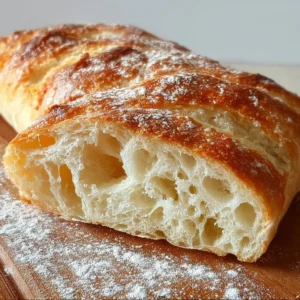
Ciabatta Bread
A simple and rewarding ciabatta bread recipe that yields a beautifully crusted loaf. Perfect for sandwiches or dipping in olive oil.
Ingredients
Bread Ingredients
- 4 cups all-purpose flour Around 500g; cheap store brand is fine.
- 1.5 tsp instant yeast About 5g.
- 1.75 cups warm water Around 410ml; ensure it's warm but not hot.
- 2 tsp salt About 10g.
- 3 tbsp extra virgin olive oil About 45ml; quality matters for flavor.
Instructions
Preparation
- In a large mixing bowl, combine flour and salt.
- In another bowl, dissolve yeast in warm water.
- Gradually mix the yeast mixture into the flour until a shaggy dough forms.
- Knead on a floured surface for about 10 minutes until smooth.
- Place dough in a greased bowl, cover, and let rise for about an hour or until doubled.
- Punch down the dough, divide it into two pieces, and shape each into an oval loaf.
- Let loaves rise on a parchment-lined baking sheet for another 30-45 minutes.
- Preheat oven to 425°F (220°C), drizzle loaves with olive oil, sprinkle with sea salt, then bake for 20-25 minutes until golden brown.
Notes
Let the loaves cool completely before cutting. They can be stored at room temperature in a clean kitchen towel for 1-2 days. Freeze extra slices in a zip bag for longer storage.