👉 Let’s stay connected on social media!
How to Make an Easy Artisan French Baguette at Home in Simple Steps

QUICK REMINDER:
While we have provided a jump to recipe button, please note that if you scroll straight to the recipe card, you may miss helpful details about ingredients, step-by-step tips, answers to common questions and a lot more informations that can help your recipe turn out even better.
We, as a society, have decided that bread is “too hard” and I just think that’s emotional damage talking, not facts. Like, we will wait in line for 40 minutes and pay nine dollars for a single baguette acting like we don’t have an oven at home and unresolved control issues.
Also: we’re in the era of “romanticize your life,” right? People are buying tiny lamps for their countertops and stirring iced coffee with those little glass straws like they’re in a French café. But if you actually bake your own easy artisan French baguette at home suddenly everyone’s like, “Whoa, relax, Martha Stewart.”
Hi, I’m courtney, I over-salt everything, I’ve forgotten my own child at preschool pickup exactly once (he was fine), and I truly believe a loaf of crackly bread on the counter fixes 63% of your problems. The rest is what snacks you can eat with one hand are for.
When The French Baguette Dough Stuck To My Soul And Counter
So the first time I tried to make this, the dough sounded wet. You know that obscene slapping noise when it hits the bowl? Like a golden retriever shaking off a lake? That. That was my warning sign and I ignored it like every red flag I’ve ever dated.
I followed some Very Serious Bread Person online who said things like “hydration percentage” and “autolyse” and I just nodded, pretending I wasn’t measuring flour in a chipped mug. I mixed. I waited. I did that dramatic dough stretch thing that people do on TikTok, except mine just… ripped. It smelled like wet flour and disappointment.
The texture? Imagine if Elmer’s glue and oatmeal had a baby. I kept telling myself, “No, no, it’s rustic.” No. It was sad. The dough stuck to everything—the bowl, my fingers, the cat (he’s fine, also offended). When it finally baked, the “baguette” came out shaped like Idaho. Flat. Pale. The crust sounded like cardboard when I tapped it, and the inside was just… damp. There’s no cute word for that. Just damp.
My husband tried to be nice, did that small bite + long pause thing and goes, “It tastes… like bread?” which is worse than an insult somehow. My kitchen smelled like yeasty betrayal. I rage-ate half of it with butter anyway because I am not throwing away four cups of flour during this economy.
And then, because I make bad decisions in clusters, I tried again the next day. This time I added more flour “by feel,” which apparently my feel is broken, because it baked up like a baseball bat. You could hurt someone with that loaf. I almost kept it as a self-defense tool in the car but it went stale and I threw it at a squirrel (it missed, we’re all fine).
There wasn’t a neat ending, it was just me, covered in flour, Googling “is it normal to hate baking bread” with dough in my hair at 11:47 p.m.
Why This Version Doesn’t Make Me Cry (As Much)
Okay, so here’s what finally flipped the switch from bread-related despair to “oh wait, this is kind of chill”: I stopped trying to be a fancy baker and started trying to be a lazy one. Which, shockingly, works.
First big change: I cut the steps. All those pre-ferments and special folds? No. This easy artisan French baguette situation happens in one bowl, with instant yeast, and an overnight rise where the dough does the work while I do absolutely nothing except scroll houses I can’t afford.
Emotionally, I also lowered the stakes. It didn’t have to look like something from a bakery in Paris; it just had to be crunchy outside, chewy inside, and not taste like sadness. Once I let go of perfection, it got better. (Annoying but true.)
Practically, the real game changer was patience without micromanaging. Long rise, no knead, very gentle shaping. I used to manhandle the dough like it owed me money. Now I treat it more like a sleepy toddler: move it, don’t wake it. I also stopped dumping in extra flour when it looked sticky—turns out “a little sticky” is not a moral failing, it’s just… correct.
Do I trust it every time? No. Absolutely not. I still peek in the oven at minute 12 like the bread will vanish if I don’t supervise. But this version has worked enough times that I now casually tear off pieces at dinner like, “Oh this? I just threw it together,” and then internally high-five myself for three hours.
And if it fails? Whatever. Worst-case scenario: you tear up the inside, toast it in butter, and pretend you meant to make croutons.
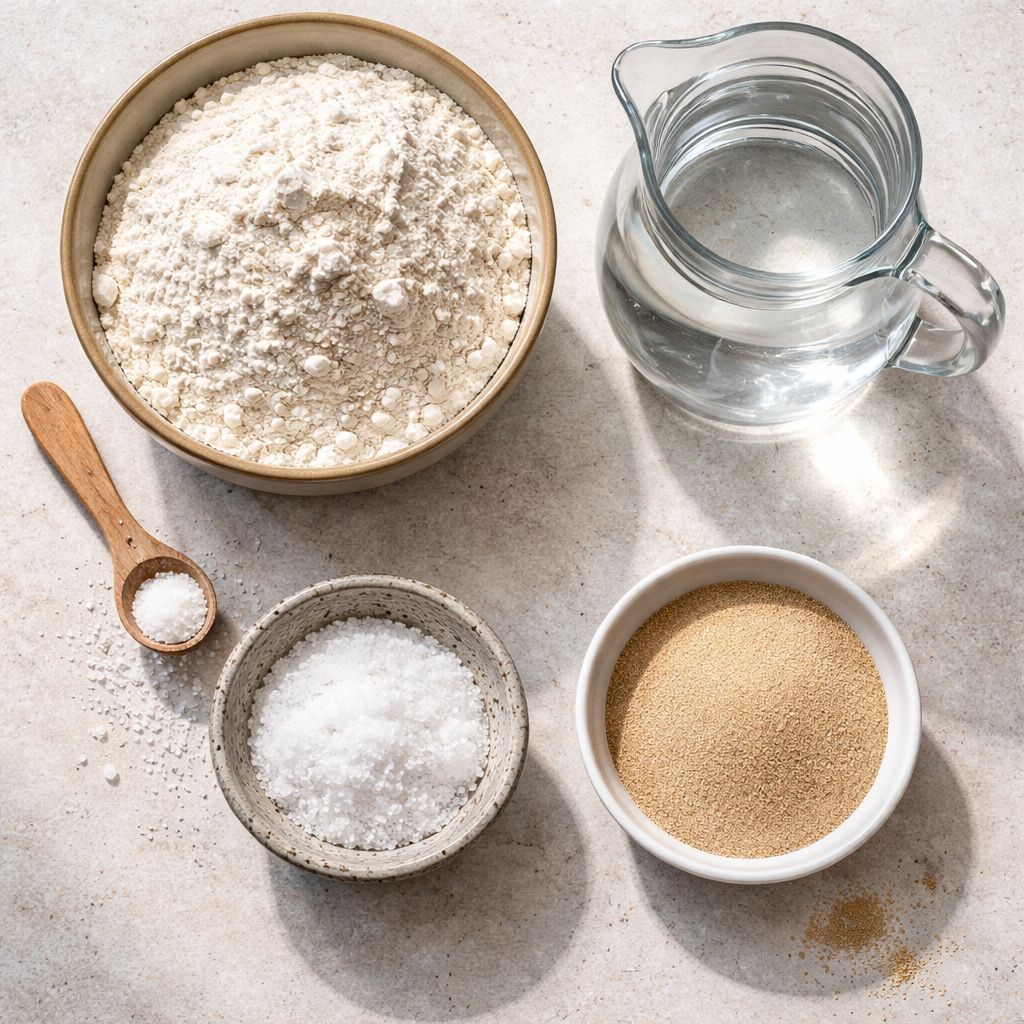
What You Actually Need (Plus Opinions)
- 4 cups all-purpose flour
- 1 1/2 cups water (room temp, we are not doing thermometers today)
- 2 teaspoons salt
- 1 teaspoon instant yeast
You can use bread flour if that’s what you hoard in your pantry like the rest of us did in 2020, but all-purpose is cheap, chill, and totally fine. The tiny amount of yeast feels wrong (I know), but the long rise makes up for it. Salt is non-negotiable unless you enjoy bland carbs and sadness. The budget math is also hilarious, because this whole dramatic loaf costs like… a dollar? Maybe. Depends how fancy your salt is.
How It Actually Goes Down (aka The Plan, Sort Of)
- In a large bowl, combine flour, salt, and instant yeast.
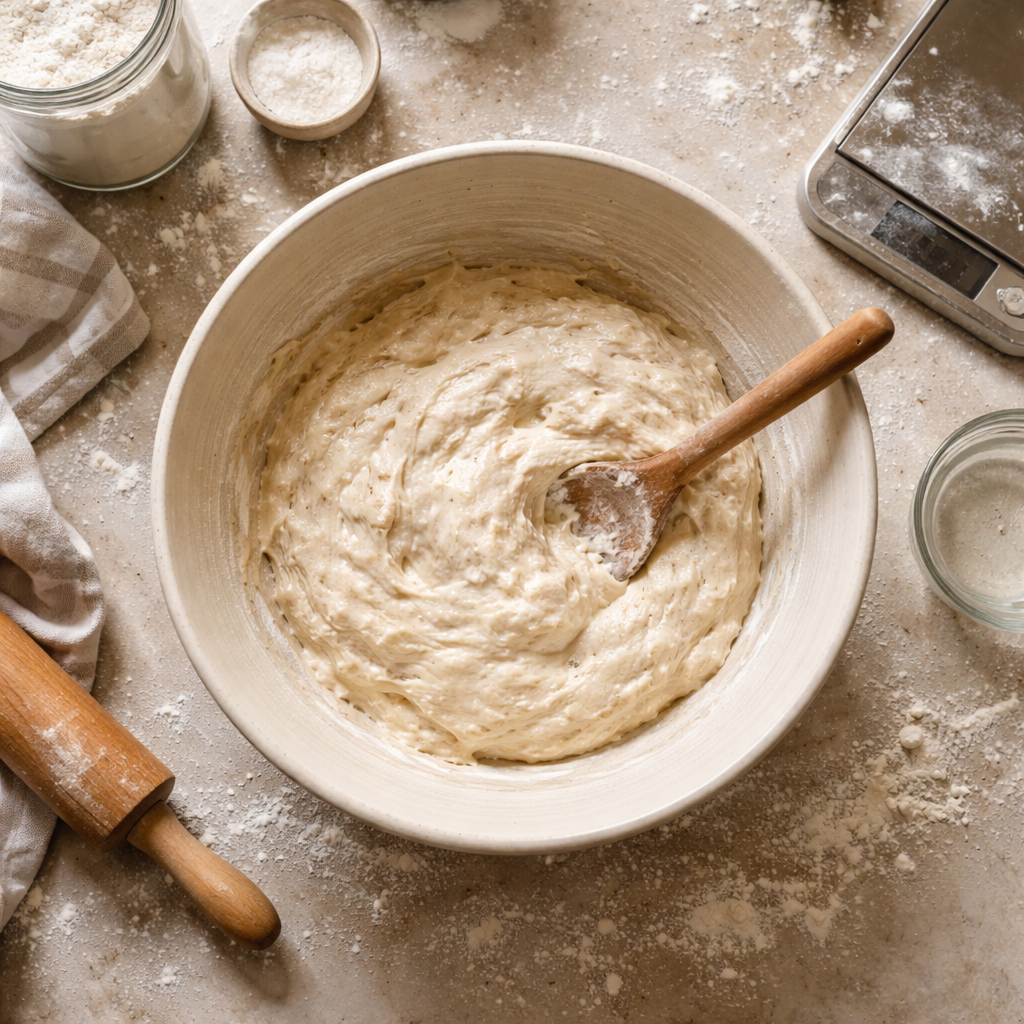
- Add water and mix until a shaggy dough forms.
- Cover the bowl with plastic wrap and let it rise at room temperature for 12-18 hours.
- Preheat the oven to 450°F (230°C) and place a Dutch oven inside to heat.
- Turn the dough out onto a floured surface and shape it gently into a ball.
- Let it rest for 30 minutes.
- Carefully place the dough in the preheated Dutch oven, cover it, and bake for 30 minutes.
- Remove the lid and bake for an additional 15 minutes until golden brown.
- Remove from the oven and let it cool on a wire rack before slicing.
Here’s the messy truth: step 2 is where people panic. It’s supposed to look like something between cookie dough and swamp. If every bit of flour is perfectly incorporated and smooth, you probably overmixed and I’m sorry. When you do the overnight rise, the dough will puff, smell slightly tangy/yeasty (like a beer commercial but less obnoxious), and wobble when you jiggle the bowl. That wobble is your friend.
When you dump it out, DO NOT DEFLATE IT LIKE A BOUNCY CASTLE. Flour your hands, pretend you’re gently tucking it into a blanket. And yes, the Dutch oven is dramatic, but it traps steam and gives you that bakery crust instead of sad pale loaf energy.
Also: the part where you’re supposed to “let it cool”? I never wait fully. I tear off the end while it’s still borderline too hot to touch, burn my fingers just a little, and then act surprised every time.
Bread, Kids, And Whatever You’re Juggling Right Now
Be honest: are you here because you actually wanted to bake bread, or because you had a day and needed to scroll something calm? Either way, hi. Sit. Drink water. Tell me in your head (or out loud to your dog) what chaos you’re escaping from right now.
Are your kids also suspicious of anything not pre-sliced? Mine looked at this beautiful crusty loaf like it might bite them first. Then I served it warm with butter next to soup and suddenly I was “the best cooker ever,” which is hilarious because last week I overcooked frozen fries. If you need a full “I did something” dinner with zero effort, do this bread and something like slow cooker fajitas you can ignore all day. That’s a restaurant meal for people who forgot to plan. So, all of us.
Do you also have that one bag of flour in the pantry that’s been silently judging you for months? This is what you use it for. And if you’re thinking, “My kitchen is too small, my oven is weird, my life is too much,” same. I’ve made this in a rental with a crooked stove and a cat who thinks the preheating beep is his dinner bell.
Talk to me in your head while you bake: “This looks wrong.” Yes. It will. “It’s too sticky.” Maybe it is, maybe it’s not, dust a LITTLE flour and keep going. “What if it doesn’t rise?” Then we pivot to croutons. Or bruschetta. Or stress-tearing it over the sink while hiding from your family. No wrong answers here.
Some Questions You’re Probably Already Thinking
Yes, you can. Stir it into the warm-ish water first and let it sit for about 5–10 minutes until it’s foamy, then add that to the flour and salt. If it doesn’t foam, your yeast is probably dead and honestly that’s not on you, that’s on the yeast.
It helps a LOT, but it’s not the only way. You can use a heavy oven-safe pot with a lid, or bake the dough on a hot sheet pan with a metal pan of water on the bottom rack to fake the steam. Is it identical? No. Is it still delicious? Yup.
Probably not. This is a high-hydration dough, so it’s supposed to be sticky and loose. If it’s literally pourable like pancake batter, add a bit more flour next time, but for this round just flour your hands and the counter and keep going. Messy dough often bakes into the best crumb.
Cool it completely, then keep it cut-side down on a cutting board for a day if your house isn’t super dry. After that, I wrap it in a clean kitchen towel. Avoid the fridge—it makes bread sad and stale. You can freeze slices if you want; they toast up beautifully.
Absolutely, and you should. Once it’s baked and cooled a bit, slice it, slather with softened butter, garlic, herbs, whatever, and toast. Or make over-the-top brunch with it next to something like ridiculous French toast
I don’t know, there’s just something weirdly grounding about pulling a loaf of bread out of your own oven. Like, everything else might be chaos—emails, laundry chair, texts you’re ignoring—but this one thing rose while you slept and turned into crackly, golden proof that you did, in fact, do something.
Anyway, I was going to say something profound about slowing down and breaking bread and community but the timer just went off and I think I smell the bottom getting a little too dark so hang on—

Easy Artisan French Baguette
A simple, no-knead artisan French baguette recipe that delivers a crunchy crust and chewy interior with minimal effort.
Ingredients
Main Ingredients
- 4 cups all-purpose flour Bread flour can be used, but all-purpose is recommended for ease.
- 1.5 cups water Room temperature.
- 2 teaspoons salt Essential for flavor.
- 1 teaspoon instant yeast A small amount is sufficient due to long rise time.
Instructions
Preparation
- In a large bowl, combine flour, salt, and instant yeast.
- Add water and mix until a shaggy dough forms.
- Cover the bowl with plastic wrap and let it rise at room temperature for 12-18 hours.
Baking
- Preheat the oven to 450°F (230°C) and place a Dutch oven inside to heat.
- Turn the dough out onto a floured surface and shape it gently into a ball.
- Let it rest for 30 minutes.
- Carefully place the dough in the preheated Dutch oven, cover it, and bake for 30 minutes.
- Remove the lid and bake for an additional 15 minutes until golden brown.
- Remove from the oven and let it cool on a wire rack before slicing.
Notes
For best results, do not deflate the dough after rising. The Dutch oven helps create steam for a better crust.