👉 Let’s stay connected on social media!
How to Perfectly Bake a Crispy French Baguette at Home
QUICK REMINDER:
While we have provided a jump to recipe button, please note that if you scroll straight to the recipe card, you may miss helpful details about ingredients, step-by-step tips, answers to common questions and a lot more informations that can help your recipe turn out even better.
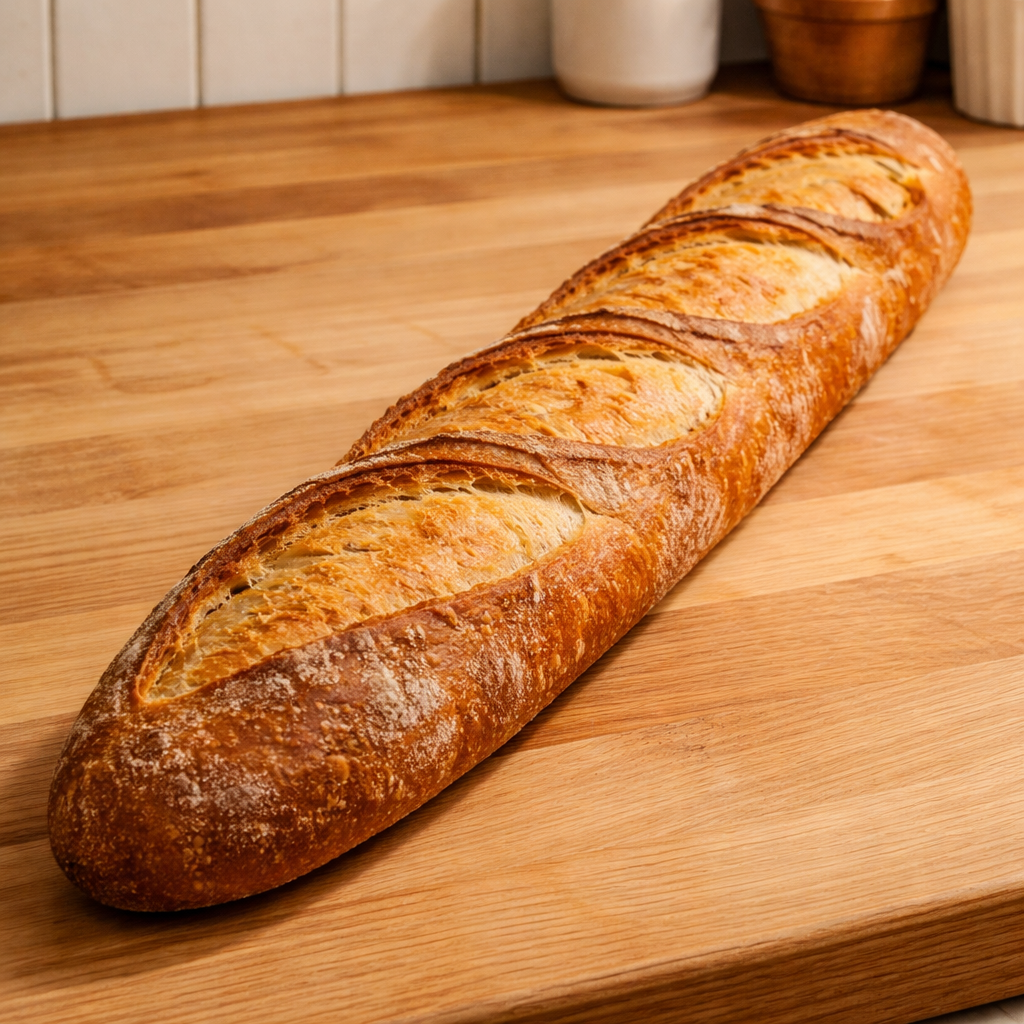
I fully believe that most “homemade bread people” are lying. Not about the baking—about how “easy” it is. No. A crispy baguette is not “so simple, just four ingredients!” It is a war. It is emotional Pilates. It is listening to your dough and also your childhood issues at the same time.
But we’re in the era of everyone trying to be a little French, a little coastal-grandma, a little “I just threw this together” while secretly watching 47 TikToks about hydration percentages. So yes, I finally made a classic French baguette that shatters when you tear it, and yes, I will still order delivery. I contain multitudes.
Also, if you’re the person who makes a baguette and then also a full dinner like this crispy rice salad situation on a Tuesday? I respect you, but I’m scared of you.
The Time I Made a French Baguette That Sounded Like a Yoga Mat
The first time I tried to make this, the dough smelled like wet cardboard and a college dorm. Not in a charming way. In a “did I just waste 500g of flour and my last shred of hope” way.
I remember pressing my ear to the bowl, trying to hear bubbles (?? as if dough whispers), and instead hearing my neighbor’s bass-heavy playlist through the wall while my so-called baguette dough just sat there. Silent. Judging me. No little yeast pops, no soft puffing when I poked it—just a cold, dense blob that kind of smacked when it hit the counter. Like a deflated basketball.
And the texture. My god. When I baked that thing, it came out looking… respectable. Golden-ish. But when I tried to slice it, the knife squeaked. Bread is not supposed to squeak. It bent, then sprang back, like a tired foam mattress. Chewing it was like doing jaw exercises at the dentist.
The worst part? I made everyone sit at the table and “just appreciate the crust” before I realized there basically wasn’t any. It was soft. Sad-soft. Hospital pillow energy. My kid literally said, “Mom, is this supposed to be like this?” and I had to pretend I was “experimenting with softer loaves” while dying inside.
I kept googling “why is my baguette gummy” at 11:43 pm with flour stuck under my nails and an empty emotional tank. Then I got mad and made frozen fries and dunked them in ranch and stared at the failed loaf like it had personally betrayed me.
Anyway, that loaf is still in my freezer. I keep thinking I’ll turn it into croutons. I will not.
Why This Version Isn’t Out To Ruin Your Life (Probably)
This version works because I stopped trying to be the magical French baker lady in the linen apron and accepted that I am a Midwest-gremlin who needs clear cues like: “If your dough feels like Play-Doh, something has gone wrong.”
Emotionally, I stopped chasing perfection. Practically, I fixed three things: water temp, patience, and steam. That’s it. I know everyone online is like “baguette crumb structure” and “hydration percentages,” but honestly, once I paid attention to my yeast (warm but not hot water, 105°F-ish, like a nice bath, not a scalding shower) everything stopped being so dramatic.
The moment the yeast actually foamed properly for the first time? I almost cried. It smelled like warm cereal and a bakery lobby, and suddenly the crispy classic French baguette felt… possible. Then I learned to leave the dough alone. The urge to keep poking it is strong. I have control issues. But every time I resisted the poke—better rise. Every time I hovered? Dense. Once I even timed myself: “You are not allowed to look for 45 minutes.” I cleaned a cupboard out of spite.
And steam! I used to ignore that step because it sounded fussy. Pour water in a hot pan? For what. But the first time I did it, the crust came out blistered and crisp and made that hollow, knock-knock sound when I tapped it, and I was like, oh. So the internet wasn’t lying about everything.
Do I fully trust it now? No. Every time I slide the shaped loaf into the oven I’m 60% confident, 40% prepared to eat crackers for dinner. But it’s reliable enough that when I plan a simple crispy-bread-based spread (maybe some cheese, maybe those crispy crab rangoon things, we are classy), I’m not spiraling. That’s growth.
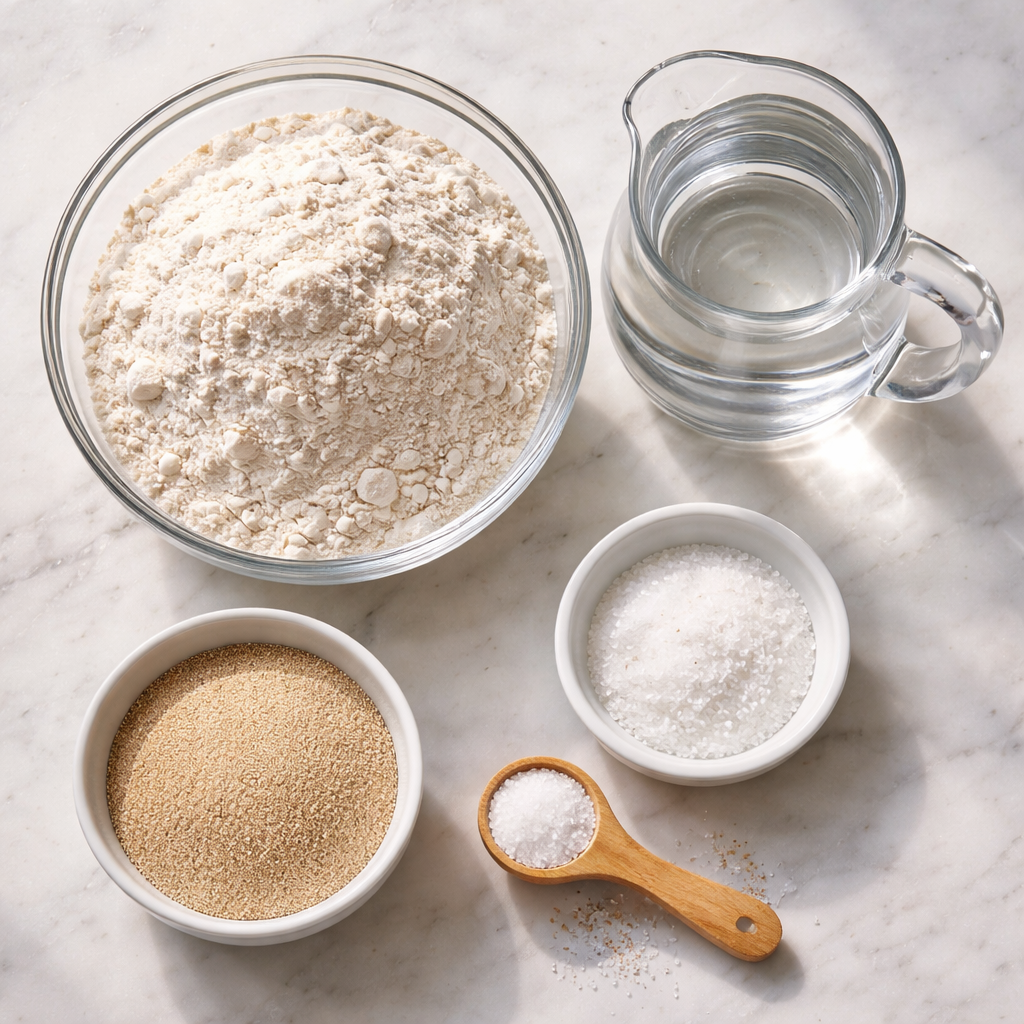
What Actually Goes In This Thing
- 4 cups (500g) all-purpose flour
- 2 tsp active dry yeast
- 1 1/2 cups (350ml) warm water (around 105°F / 40°C)
- 2 tsp salt
- Optional: 1 tbsp olive oil (if you want the tiniest hint of softness and flavor insurance)
- Flour for dusting
Use the flour you already have; nobody needs to special-order French artisan whatever unless you enjoy that sort of chaos. The olive oil is there for people who like the idea of a classic baguette but still secretly want a slightly softer chew (me, it’s me). Salt—do not skip, this is not the place to be “low sodium.” If your budget is tight, this is the beautiful part: bread is still one of the cheapest little luxuries left.
How It Goes From Wet Blob to Loud-Crunch Bread
- Activate the yeast: In a mixing bowl, combine warm water with active dry yeast. Stir gently and let sit for 5–10 minutes until foamy.
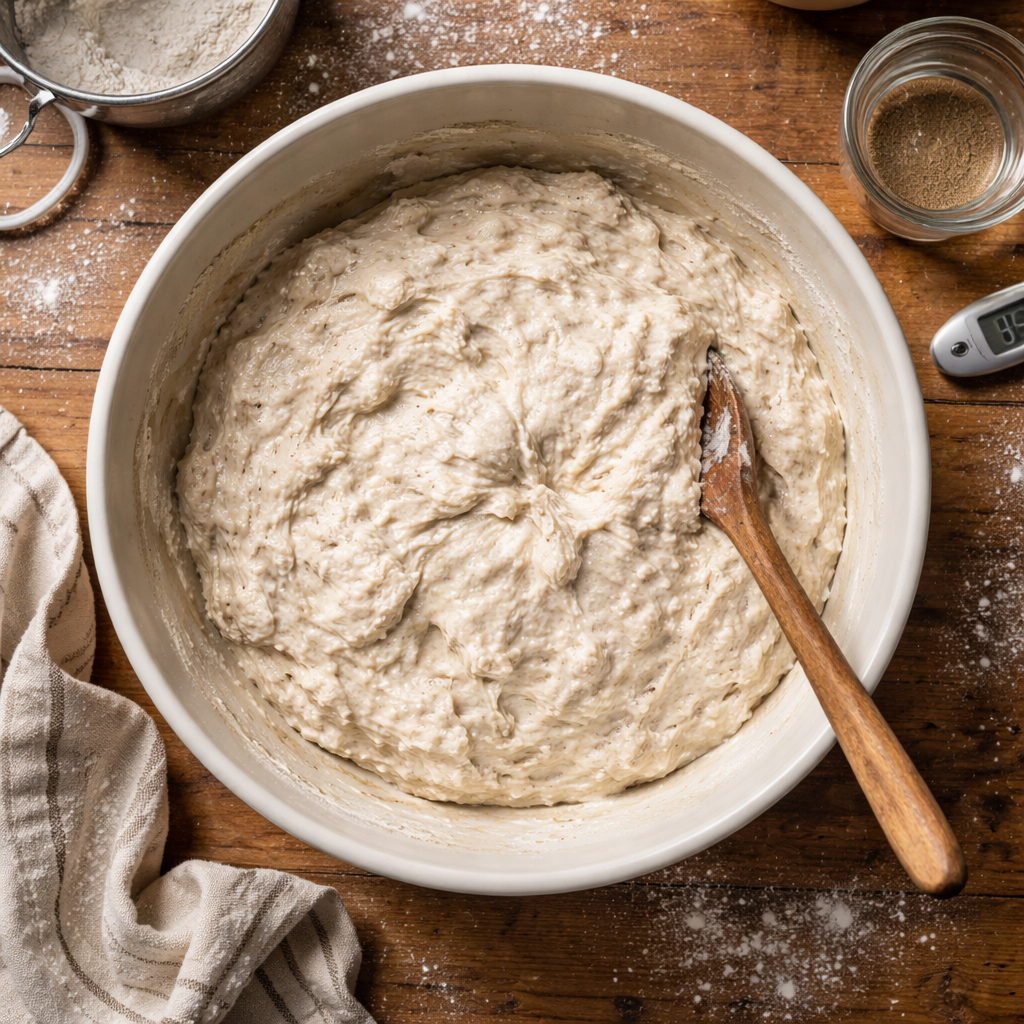
- Mix the dough: Add flour and salt to the yeast mixture. Stir until a shaggy dough forms.
- Knead the dough: Transfer to a floured surface and knead for 8–10 minutes until smooth and elastic.
- First rise: Place dough in a lightly oiled bowl, cover, and let rise in a warm spot for 1 to 1 1/2 hours until doubled in size.
- Shape the baguette: Flatten dough into a rectangle, fold into thirds, roll into a 14-inch loaf, pinch seam closed and taper ends.
- Second rise: Place shaped loaf on parchment-lined baking sheet, cover loosely, and let rise for 45 minutes to 1 hour until puffed.
- Preheat oven to 475°F (245°C) with a baking stone or heavy baking sheet on middle rack and empty pan on bottom rack.
- Score the baguette with 3–4 diagonal slashes about 1/4 inch deep.
- Create steam by pouring 1 cup (240ml) hot water into the bottom pan, then bake the baguette on the stone or sheet for 20–25 minutes until golden brown and crisp.
- Cool completely on a wire rack for at least 30 minutes before slicing.
Okay but in real life: the “shaggy dough” phase looks wrong. It will be messy, bits of flour hanging on, you’ll think “this cannot become bread.” Give it 5 more minutes of kneading. When you press it and it springs back slowly, you’re good. If it’s sticking aggressively to everything, dust a tiny bit more flour. NOT A MOUNTAIN. (I say this as someone who once turned her dough into a doorstop.)
Rising: find the warm weird corner of your house. For me it’s near the stove vent; for you it might be that sunny patch by the bathroom. If your dough barely moves, your house is too cold—wrap the bowl in a towel and give it more time.
When it bakes, it should sound alive—little crackles as it cools, like Rice Krispies but sophisticated. If you don’t hear that? Don’t spiral. You still made bread. That alone is a small, loud miracle.
You, Me, and Flour on Every Surface
Are you also the person who swears, “I’m just making one simple thing,” and then suddenly there are eight bowls, three towels, and a mysterious wet spot on the floor? Why is bread so splashy.
I know some of you are going to DM me like, “Courtney, my dough didn’t double but I baked it anyway and now it’s a baguette-shaped stone—what now?” and honestly? Croutons. Bread crumbs. Weapon. Conversation piece. You’re fine.
Also: can we talk about how everyone’s family magically appears in the kitchen the SECOND the baguette goes in the oven? Nobody is around when you’re kneading and questioning your life choices, but the minute it smells like a bakery, suddenly people are “just passing through” and “testing the crust” like quality control.
If you’re making this after work, please do yourself a favor and make the rest of dinner aggressively easy. Like “cut up some cheese, open a jar of olives, maybe reheat leftovers, or throw together one of those ridiculously crispy main courses” level easy. The bread is the event. The rest is set dressing.
Anyway, if you ruin the first one, I expect you to complain about it in detail. What did it smell like? What noise did it make when you cut it? We’re bonding through failure here.
Frequently Asked Bread Panic Questions
Possibly both. If it’s been more than 10 minutes and the surface of the water still looks like sad swamp instead of creamy, beige foam, your yeast is probably done for. Toss it and start over with new yeast and slightly warmer water. I know, it hurts. But if you push through with dead yeast, you’re just signing up for disappointment in loaf form.
Yes. Use the same amount, skip the full “proofing” step, and just mix it in with the flour and salt. I still like to whisk it into the warm water because it makes me feel involved, but technically you don’t have to.
Look. No one is coming to arrest you if you cut it early. But if you slice right away, all the steam escapes too fast and the inside can go weirdly gummy. If you can wait even 20 minutes, the texture evens out and your crispy crust stays, well, crispy. Use that time to clean the crime scene that is your kitchen. Or don’t.
Not necessarily. Ovens lie. If the bread is cooked through (it feels light for its size, sounds hollow when you tap the bottom), you’re probably fine. Next time, leave it in for 3–5 more minutes or move the rack slightly higher for more direct heat. And make sure that steam pan is in there—that really helps with color.
Yes, and I actually like doing this when I’m pretending to be a functioning adult. Let the dough do its first rise, then gently deflate, cover, and stash in the fridge for up to 12–16 hours. Bring it back to room temp, shape, let it rise again, then bake. The flavor gets deeper and you get to look effortless while secretly playing bread Tetris with your schedule.
I don’t know what it is about pulling a baguette out of the oven that makes everything feel slightly less awful for a minute. You stand there in the hot oven glow, listening for those tiny crust crackles, and suddenly you’re like, “Maybe I am a person who can handle things.”
And then someone yells from the other room asking where their socks are, and the moment is gone, but the bread is still warm on the counter, and that’s enough to keep going for one more… well, at least until the loaf is gone.

Classic French Baguette
This classic French baguette recipe yields a crispy, golden crust and a soft interior, perfect for enjoying fresh or as part of a meal.
Ingredients
Main Ingredients
- 4 cups 4 cups (500g) all-purpose flour Use regular all-purpose flour, no need for special varieties.
- 2 tsp 2 tsp active dry yeast Ensure the yeast is fresh for good activation.
- 1.5 cups 1 1/2 cups (350ml) warm water Water should be around 105°F / 40°C.
- 2 tsp 2 tsp salt Do not skip the salt.
- 1 tbsp 1 tbsp olive oil Optional for a slightly softer texture.
- as needed cups Flour for dusting Use as necessary while kneading.
Instructions
Preparation
- In a mixing bowl, combine warm water with active dry yeast. Stir gently and let sit for 5–10 minutes until foamy.
- Add flour and salt to the yeast mixture. Stir until a shaggy dough forms.
- Transfer to a floured surface and knead for 8–10 minutes until smooth and elastic.
- Place dough in a lightly oiled bowl, cover, and let rise in a warm spot for 1 to 1 1/2 hours until doubled in size.
- Flatten dough into a rectangle, fold into thirds, roll into a 14-inch loaf, pinch seam closed and taper ends.
- Place shaped loaf on parchment-lined baking sheet, cover loosely, and let rise for 45 minutes to 1 hour until puffed.
- Preheat oven to 475°F (245°C) with a baking stone or heavy baking sheet on the middle rack and an empty pan on the bottom rack.
- Score the baguette with 3–4 diagonal slashes about 1/4 inch deep.
- Create steam by pouring 1 cup (240ml) hot water into the bottom pan, then bake the baguette on the stone or sheet for 20–25 minutes until golden brown and crisp.
- Cool completely on a wire rack for at least 30 minutes before slicing.
Notes
Ensure to allow the dough to rise in a warm, draft-free place. If the dough doesn’t rise as expected, be patient; it may need more time. Wait at least 20 minutes after baking before slicing for the best texture.