👉 Let’s stay connected on social media!
How to Make Authentic Louisiana Seafood Gumbo with Bold, Comforting Flavor

QUICK REMINDER:
While we have provided a jump to recipe button, please note that if you scroll straight to the recipe card, you may miss helpful details about ingredients, step-by-step tips, answers to common questions and a lot more informations that can help your recipe turn out even better.
Food is not neutral. Anyone who says “it’s just soup” has never watched a grown adult cry into a bowl of gumbo while a football game plays at unreasonable volume in the background.
We’re in this weird cultural moment where everyone is allegedly “unbothered” and “low effort” and “ordering in,” and I’m over here standing at the stove for 50 minutes babysitting a roux like it’s a newborn. I blame TikTok and also myself. Because once you’ve tasted a deep, dark, borderline-unhinged pot of Louisiana seafood gumbo, the comforting kind that somehow tastes like a hug and a threat at the same time, you cannot go back to mild little soups.
Also yes, I’m from the Midwest. No, I do not claim authenticity. I claim obsession. Different credential, same energy. I felt the same way when I fell into making that first bubbling pan of pasta alla sorrentina on a random Tuesday and suddenly my whole kitchen personality changed.
The First Time I Ruined Louisiana Seafood Gumbo and Nearly Quit
The very first time I tried to make gumbo, the roux smelled like…burnt crayons. Burnt crayons and sadness.
If you’ve never scorched flour and oil together, imagine a faint campfire smell but more plastic, and you’re just stirring, thinking, “This is fine, this is fine,” while the color goes from blonde to tan to mahogany to “oh no.” The recipe told me “cook until the color of dark chocolate,” but didn’t say “NOT the color of despair.” Important distinction.
I remember standing there in my tiny apartment kitchen, listening to the pan make these tiny angry pops. The oil got weirdly foamy. The spoon felt heavier. My smoke alarm, who I love like a distant cousin I only see at weddings, started to clear her throat.
And did I stop? Obviously not. I dumped in the trinity—onion, celery, pepper—and it hissed like a cat you looked at wrong. The smell shifted from burnt crayon to something like bitterness plus wet cardboard. Stunning.
The sausage (which I sliced way too thick; it looked like I’d just thrown in a pack of hockey pucks) refused to brown properly because the bottom of the pot was already scorched. The whole thing was this muddy, slightly grainy, sad stew situation. My shrimp overcooked and curled into those tight little commas of regret.
I still served it, because I am brave and also stubborn. My partner took one bite, chewed thoughtfully, and said, “It’s…intense.” Not “good.” Not “bad.” Just “intense.” Like a bad date who talks about crypto.
We ate half our bowls and then pivoted hard to frozen pizza. I put the pot in the fridge out of sheer denial. It lived there three days while I pretended it might somehow improve in the night like a character arc. It did not.
What Finally Worked (After I Stopped Trying To Win Gumbo)
This version only works because I stopped treating gumbo like a performance and started treating it like therapy. Low stakes, lots of stirring, occasional crying. The usual.
Practically: I slowed way, way down. No more high heat “to save time.” The roux for this ultimate Louisiana seafood gumbo recipe gets cooked on medium-low, possibly forever, with a podcast on and my phone on Do Not Disturb so I don’t doomscroll while my flour incinerates.
Emotionally: I had to accept that my kitchen will never be a New Orleans kitchen. I don’t have my grandma’s cast-iron from 1948. I have a slightly dinged Dutch oven I bought on sale and a grocery store that thinks “Cajun” is a single dusty jar on the back shelf. That’s fine. Instead of chasing perfection, I started chasing flavor that felt like comfort: smoky, deep, spicy but not competitive.
I learned to add the stock slowly instead of sloshing it in all at once like I was putting out a fire (even though, to be fair, sometimes I am). I stopped using pre-cooked shrimp, because those little rubber bands deserve better. I started tasting for salt after letting it simmer with the sausage, because that stuff is salty like gossip.
Tiny realizations added up: letting the veggies soften properly, toasting the Cajun seasoning a second before it hits the pot, not being scared of a darker roux but also not trying to speedrun it. Now the gumbo tastes layered instead of loud.
Do I still hover anxiously over the pot like it’s going to betray me? Absolutely. But I also know that if I don’t rush, this actually turns into the kind of bowl that shuts everyone up at the table for a solid 30 seconds. Which, frankly, is my love language.
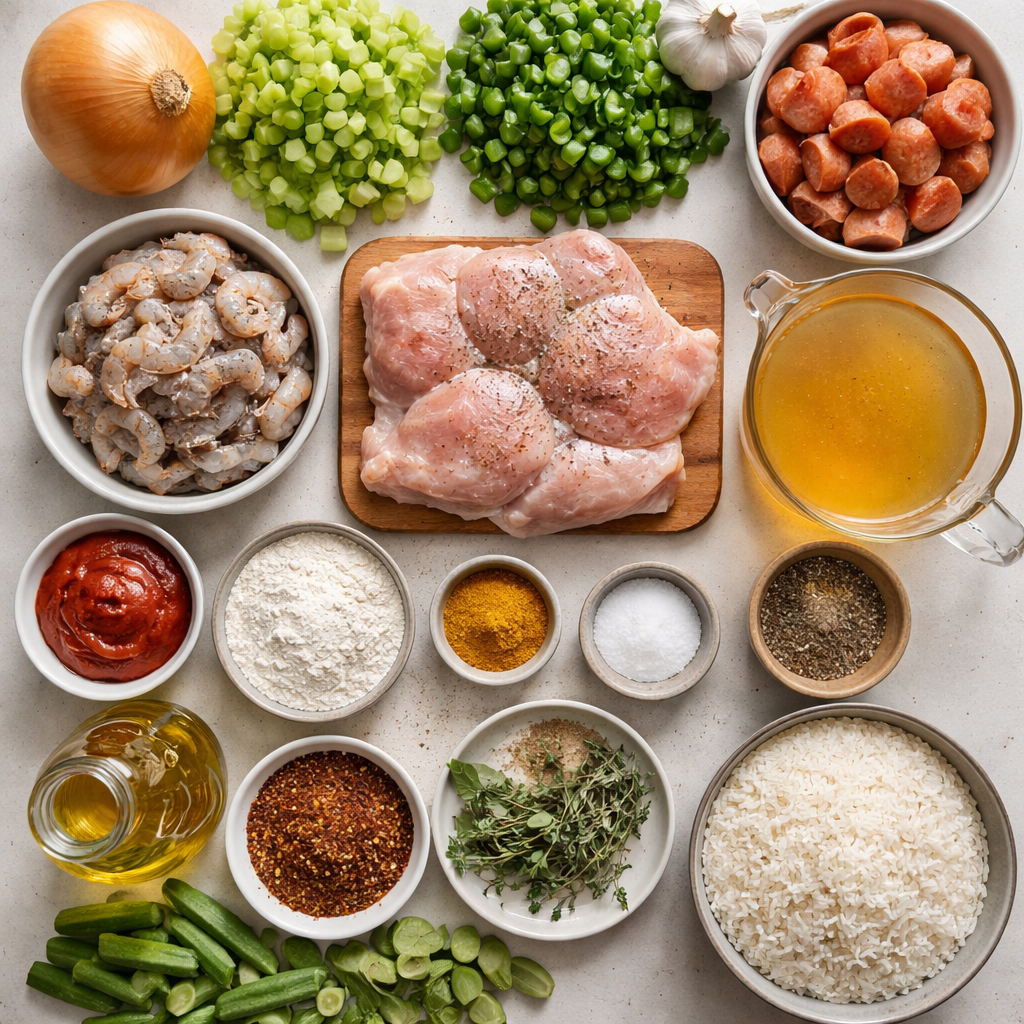
What You Actually Need in the Kitchen
- 1/2 cup all-purpose flour (Consider whole wheat for color and flavor change.)
- 1/2 cup vegetable oil (Can substitute with canola oil.)
- 1 medium yellow onion (White onion can be used, but alters sweetness.)
- 2 stalks celery (Leeks can be a milder substitute.)
- 1 medium green bell pepper (Substitute with red or yellow for sweetness.)
- 4 cloves garlic (Minced.)
- 1 pound andouille sausage (Consider smoked kielbasa or any spicy sausage.)
- 1 pound raw shrimp (Avoid pre-cooked shrimp for best texture.)
- 1 cup lump crab meat (Claw meat is a great alternative.)
- 2 tablespoons Cajun seasoning (Toast before use for better flavor.)
- 2 pieces bay leaves (Omit if out.)
- 6 cups seafood or chicken stock (Vegetable stock can provide a lighter flavor.)
- 1 can diced tomatoes (Skip for a more traditional gumbo.)
- to taste salt (Adjust to your preference.)
- to taste black pepper (Adjust to your preference.)
- 3 cups cooked white rice (Cornbread can also be used for variety.)
- 1/4 cup green onions (Chopped for garnish.)
If you’re on a budget, the crab is the first thing to cut; the gumbo will forgive you. Texture-wise, andouille gives that snappy, smoky punch, but honestly I have done this with random “spicy chicken sausage” from the sale bin and nobody noticed because they were too busy dunking bread into the bowl like heathens. Availability-wise: use the stock you can get, not the stock that wins awards in your imagination.
How This Actually Comes Together (More or Less)
- How to Make Louisiana Seafood Gumbo: Start your roux. Stir the flour and oil together in a heavy pot over medium-low heat, and just…stay there. Stir. Breathe. Question your life choices. Keep going until it’s a deep brown, like milk chocolate shading toward dark.
- Toss in the onion, celery, and bell pepper. It’ll sizzle and clump and look wrong for about 2 minutes; keep stirring until the veggies relax and everything starts to smell like you might be onto something.
- Add the garlic and Cajun seasoning. Stir 30–60 seconds, just until the spices wake up. Do not wander off to check your phone. This is not that moment.
- Stir in the sausage and let it brown a little in the roux-veg chaos, about 5–7 minutes, scraping the bottom so nothing sticks too hard.
- Slowly whisk or stir in the stock, a cup at a time, until it thins into an actual soup and not rage gravy. Add the bay leaves and tomatoes if you’re using them.
- Bring to a gentle simmer (not a rolling boil, we are not cooking pasta here) and let it putter for 30–40 minutes. Taste, adjust salt and pepper, maybe more Cajun seasoning if your soul says yes.
- Add the shrimp and crab in the last 5–7 minutes, just until the shrimp turn pink and opaque and the crab warms through. Turn off the heat.
- Serve the gumbo over hot cooked rice, then throw green onions on top like you’re on a cooking show and someone’s filming you from the corner.
Non-linear explanation: somewhere between steps 2 and 6 you will probably wipe the stove, shoo a child or pet away from the hot pot, and Google “is my roux too dark or just dramatic.” It’s fine. The roux always looks scarier in the pot. ALSO: if at any point it smells actually burned (like ashtray, not toasty), abort mission and restart. I know that’s annoying, but burnt roux never gets less burnt. It just gets sadder.

The Part Where Your House Explodes (Emotionally)
Let me guess: you’re trying to make this while answering work emails, texting someone back, and also keeping a small human or pet from licking the floor? Same.
Gumbo is such a weirdly social recipe because the second it starts to smell good, people appear. Roommates, kids, partners, that one neighbor who “just happened to be walking by.” Do you have that? Someone always floats in with “Whatcha making?” like they didn’t absolutely hear you banging the wooden spoon around for an hour.
Also, are you a “gumbo over rice” person or a “rice in gumbo” person? Or chaotic third option: you eat it with a hunk of bread because that’s what you have, like when I served a pot of this next to leftover bruschetta dip from a party and everyone pretended that was normal.
If your house is loud, this is a good recipe, because the simmering covers the noise and nobody can hear you mutter when you realize you forgot to thaw the shrimp. If your house is quiet, turn on some music, stir the pot, and pretend you’re in a movie about a slightly messy but lovable cook who “just throws things together” even though you measured that flour with laser focus.
And if someone comes into the kitchen and says, “It smells amazing, when is it done?” you have my full permission to say, “When I say so,” and then taste it dramatically and nod like a weather forecaster.
Questions You’re Probably Already Typing
Yes, and honestly it’s better the next day. The flavors settle down, the broth gets richer, and you get to feel extremely smug reheating something that tastes like a special occasion on a random Wednesday. Just add the seafood closer to serving time if you can, so it doesn’t overcook.
No, you need something smoky and flavorful, not specifically andouille. Use any spicy sausage you like, just avoid anything sweet or maple-ish unless you want emotional whiplash in your bowl.
The roux is the whole point. It’s the backbone, the base, the drama. Without it, you basically have a nice seafood stew, which is fine, but not the same soul-hug-in-a-bowl situation. That said, if standing and stirring makes you want to scream, you can do a lighter roux and a shorter cook; it’ll still be good, just less intense.
As spicy as you can comfortably eat a whole bowl of. I aim for “warmth across your tongue” not “I can see through time.” You can always pass hot sauce at the table for the people who like to suffer.
Yup. The texture of the shrimp will soften a bit after freezing, but flavor-wise it holds up. Freeze without the rice, because frozen rice in soup turns into weird little mush pebbles, and you deserve better than that.
I always think I’m making this for “a cozy night in,” and then it accidentally turns into a whole event. Someone opens the door and the smell punches them in the face (lovingly), and suddenly there’s music and mismatched bowls and people telling stories they’ve told a hundred times.
Sometimes I pull the leftover rice and seafood out the next day, mix it with whatever vegetables I didn’t use, and turn it into a strange little follow-up meal while browsing recipes for things like California roll cucumber salad and pretending I’m a person with restraint.
And then the pot’s soaking in the sink, the stove is splattered, I’m sitting on the counter eating one more spoonful straight from the container, thinking I should write down exactly what I did this time before I forget and—
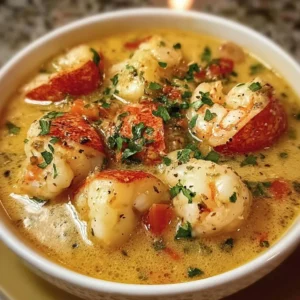
Louisiana Seafood Gumbo
A comforting and flavorful Louisiana seafood gumbo made with a dark roux, fresh seafood, and traditional seasonings that brings warmth and joy to the table.
Ingredients
Roux Ingredients
- 1/2 cup all-purpose flour Consider whole wheat for color and flavor change.
- 1/2 cup vegetable oil Can substitute with canola oil.
Vegetable Base
- 1 medium yellow onion White onion can be used, but alters sweetness.
- 2 stalks celery Leeks can be a milder substitute.
- 1 medium green bell pepper Substitute with red or yellow for sweetness.
- 4 cloves garlic Minced.
Proteins
- 1 pound andouille sausage Consider smoked kielbasa or any spicy sausage.
- 1 pound raw shrimp Avoid pre-cooked shrimp for best texture.
- 1 cup lump crab meat Claw meat is a great alternative.
Flavoring Ingredients
- 2 tablespoons Cajun seasoning Toast before use for better flavor.
- 2 pieces bay leaves Omit if out.
- 6 cups seafood or chicken stock Vegetable stock can provide a lighter flavor.
- 1 can diced tomatoes Skip for a more traditional gumbo.
- to taste salt Adjust to your preference.
- to taste black pepper Adjust to your preference.
Serving Ingredients
- 3 cups cooked white rice Cornbread can also be used for variety.
- 1/4 cup green onions Chopped for garnish.
Instructions
Preparation of Roux
- Start your roux by stirring the flour and oil together in a heavy pot over medium-low heat until it reaches a deep brown color like milk chocolate shading toward dark.
Cooking Vegetables
- Toss in the onion, celery, and bell pepper; stir and cook until the veggies relax and everything starts to smell inviting, about 2 minutes.
Adding Garlic and Spices
- Add the garlic and Cajun seasoning, and stir for 30-60 seconds to awaken the spices.
Adding Sausage
- Stir in the sausage and let it brown slightly in the roux-vegetable mix for about 5-7 minutes.
Making the Soup
- Slowly whisk or stir in the stock, adding one cup at a time until the mixture is smooth and no longer a thick paste.
- Add the bay leaves and diced tomatoes if using, and bring to a gentle simmer for about 30-40 minutes.
Finalizing the Gumbo
- Add the shrimp and crab in the last 5-7 minutes until the shrimp are pink and opaque.
- Serve the gumbo over hot cooked rice and garnish with chopped green onions.
Notes
Gumbo tastes better the next day and can be made ahead of time. You can freeze the leftovers, but avoid freezing rice with the gumbo.