👉 Let’s stay connected on social media!
Garlic Parmesan Focaccia Recipe for a Crispy, Flavor-Packed Italian Bread
QUICK REMINDER:
While we have provided a jump to recipe button, please note that if you scroll straight to the recipe card, you may miss helpful details about ingredients, step-by-step tips, answers to common questions and a lot more informations that can help your recipe turn out even better.
Food should be loud. I don’t trust silent bread. If it doesn’t crackle a little when it comes out of the oven and make the whole house smell like an Italian restaurant that definitely violates several fire codes, I’m not interested.
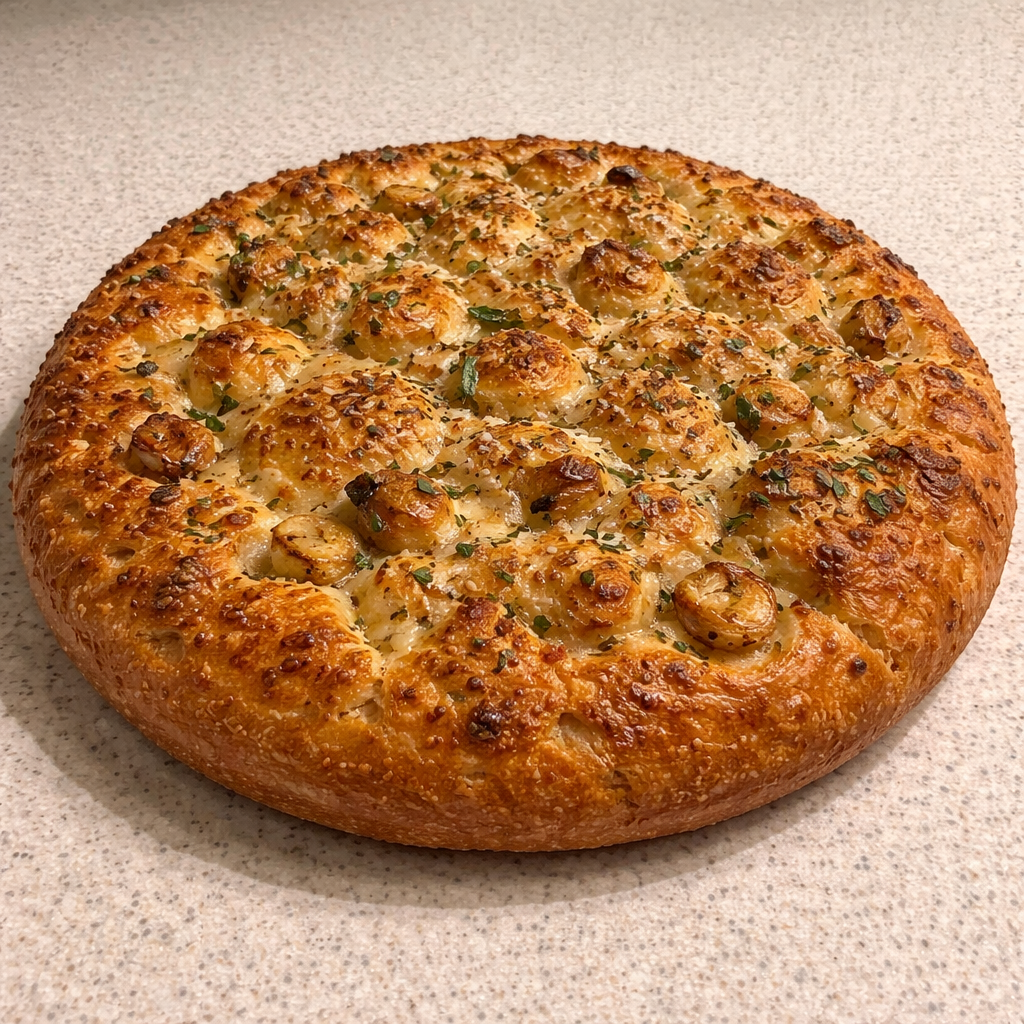
We are, as a society, in our Garlic Era. Garlic on pizza, garlic in butter, garlic in ice cream (okay that one was a crime). So obviously garlic had to move into bread in a serious, borderline‑uncomfortable way. This garlic parmesan focaccia bread is basically my love language in carb form. I make it when I’m happy, when I’m mad, and when I’m trying to apologize for snapping at my family because someone said “What’s for dinner?” one too many times.
Also yes, this is the same brain that once decided to make banana bread brownies at 11 PM “to relax.” I contain multitudes and way too much flour.
The Time I Made Garlic Parmesan Focaccia That Squeaked
First time I tried focaccia, it fought back. I wish I were being dramatic. The dough came out weirdly rubbery, like if a yoga mat and a sponge had a baby. When I pressed my fingers in to make those signature focaccia dimples? It literally squeaked. Bread should not have sound effects.
I remember standing over this sad, pale rectangle, the yeast smell a little too strong, like warm beer and gym socks, with garlic bits practically burning on top because I’d dumped them on way too early. My smoke alarm, who is absolutely the loudest member of this household, started shrieking. The dog joined in. I opened the oven and this cloud of garlicky steam just punched me in the face. Not in a good way. In a “you chopped eight cloves and didn’t think about it, did you” way.
The texture was wrong too. Instead of that bouncy, airy focaccia situation, it was dense in the middle and weirdly crisp at the bottom, like a badly behaved cracker. My husband (bless him) took a bite, chewed for a long time, and then said, “This would be really good… with soup.” Which is Midwestern for “this is not okay.”
And of course I’d invited people over. Because I love to test untested recipes on innocent victims. There I was, aggressively slicing this squeaky bread, pretending this was exactly how it was supposed to be, making way too many jokes about “rustic” and “artisanal” while silently plotting my escape from my own kitchen.
I wrapped the leftovers in foil, forgot them on top of the toaster, and found them the next morning smelling faintly like sour garlic sadness. I threw the whole thing out and honestly? The trash can deserved better.
Anyway, that disaster lived rent free in my head for like a year. Every time I saw a photo of gorgeous bubbled focaccia, I could still hear that squeak.
What Finally Snapped Into Place (Sort Of)
So this version works, mostly because I calmed down. Emotionally and scientifically. I stopped trying to make bakery‑perfect focaccia in 45 minutes while also unloading the dishwasher and googling “can toddlers live on crackers.”
The big shift was letting the dough be softer than my control issues were comfortable with. The second I accepted that this garlic parmesan focaccia bread dough should look a little sticky and honestly a tiny bit concerning, everything got better. Instead of over‑flouring it into rubber, I trusted the process. (I hate that phrase. But here we are.)
Practically: warm water that’s pleasantly bath‑like, not “oops I just boiled it.” Giving the yeast five actual minutes to wake up and froth, instead of two impatient ones where nothing happens and then you lie to yourself. Gentle kneading instead of full‑body CrossFit on the counter. A full hour of rising without poking it every three minutes “just to check.”
Emotionally: I stopped trying to make focaccia be a personality trait and let it just be bread. Which sounds ridiculous because it is. But there’s something about low‑stakes dough therapy, you know? You press your fingers into it, it springs back, and you think “same.”
The garlic situation changed too. I started putting it on top with olive oil closer to baking time, so it toasts and perfumes the kitchen instead of turning bitter and angry. Parmesan came in because I wanted something salty and nutty without committing to a whole cheese board. Now the whole thing is this chewy‑edged, soft‑centered, olive‑oil‑shiny slab that I still second‑guess every time, but honestly? It disappears in ten minutes so maybe I should hush.
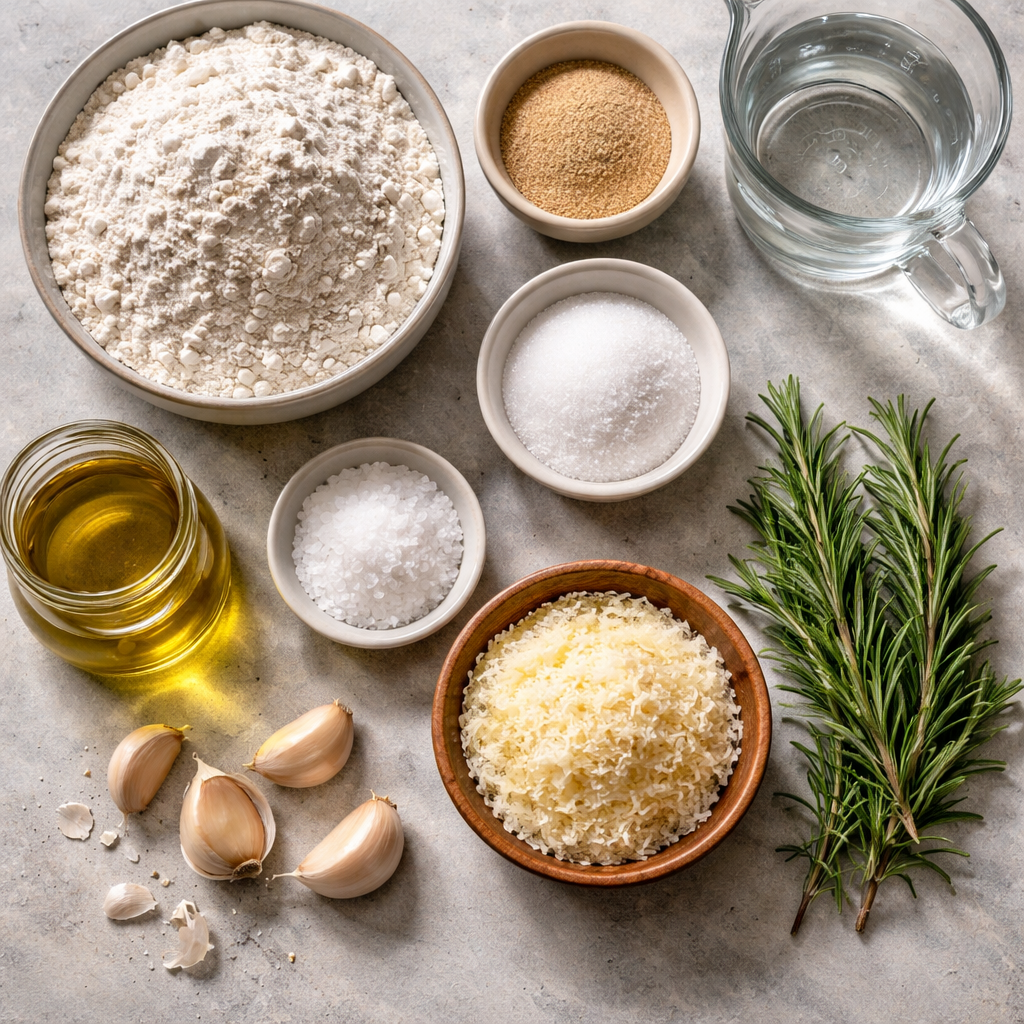
What You Actually Need in the Kitchen
- 2 cups all-purpose flour
- 1 cup warm water
- 2 tablespoons olive oil
- 1 teaspoon salt
- 1 teaspoon sugar
- 1 packet active dry yeast
- 3 cloves garlic, minced
- 1/2 cup grated Parmesan cheese
- Fresh rosemary, for topping
- Coarse sea salt, for sprinkling
Flour is basic, yes, but if you only have the off‑brand bag that’s been open since the holidays? Still use it. The focaccia doesn’t care as much as you think. The rosemary makes it feel fancy even when you’re eating it in leggings with questionable stains. And if Parmesan feels spendy that week, you can skimp a little and still get the good salty edge—this is not like my dramatic relationship with the cheese in creamy garlic mushroom stuffed shells, where I will absolutely fight for an extra handful.
How This Actually Goes Down in Real Life
- In a small bowl, dissolve sugar and yeast in warm water. Let it sit for about 5 minutes until frothy.
- In a large mixing bowl, combine flour and salt. Add the yeast mixture and olive oil. Mix until a dough forms.
- Knead the dough on a floured surface for about 5 minutes until smooth. Place in a greased bowl, cover, and let it rise for 1 hour.
- Preheat the oven to 425°F (220°C).
- Spread the risen dough onto a greased baking sheet. Use your fingers to create dimples all over the surface.
- Brush with olive oil, sprinkle minced garlic, Parmesan cheese, rosemary, and coarse sea salt on top.
- Bake for 20-25 minutes or until golden brown.
- Let it cool slightly before slicing and serving.
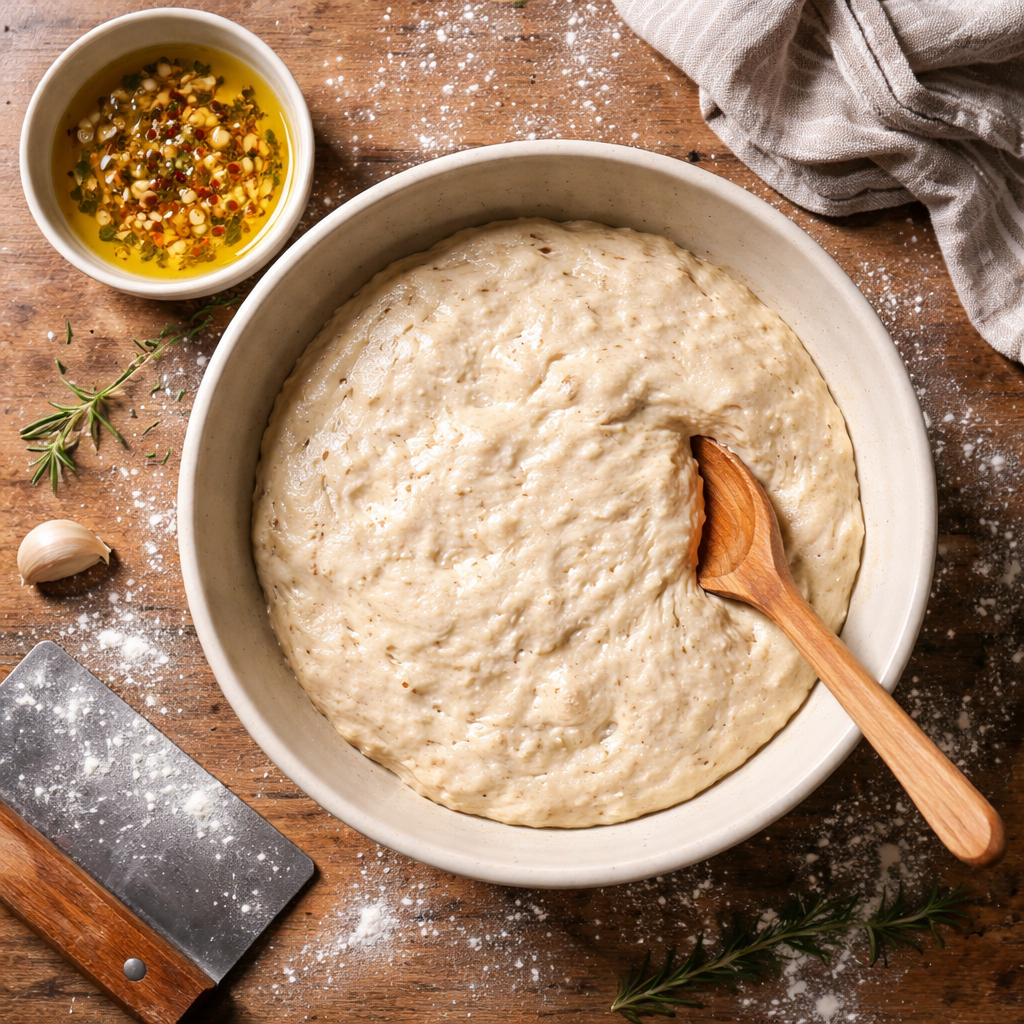
So that’s the linear version, but in reality you forget you started the yeast, panic, then remember it right when it’s perfectly frothy. You dump the flour and salt in, stir like you’re vaguely annoyed at someone, and the dough looks too wet—but that’s secretly correct. When you knead, it sticks to your hands and you’re tempted to add a mountain of extra flour. Don’t. Just a dusting. Maybe two. The dough should feel like a slightly clingy friend.
When you dimple the dough, press with confidence. ALL the way down to the pan, like you’re poking tiny craters. The olive oil will pool in there, which looks wrong for a second and then turns into golden crust magic. And if you get distracted and it rises 10 extra minutes? Honestly, that’s usually better.
Meanwhile, in the Background of Your Life
Are you also trying to make this while answering “where are my shoes” and “can I have a snack” and “what does yeast do” at the same time? Because same.
I feel like focaccia is the perfect “I’m home all afternoon but doing twelve things” bread. You stir, you walk away. You knead, you walk away. Then you get to the fun part where you stab it with your fingers and sprinkle garlic everywhere like a chaotic fairy godmother.
Do you also open the oven door too many times just to smell it? And then complain that your oven loses heat “for some reason”? We are the reason. I know this. I will not stop.
Also, I love when people message me like, “Courtney, I only have dried rosemary, is that legal?” Yes. Use it. It’s your kitchen. The focaccia police are not coming. Same answer if you’re like “I accidentally grated more Parmesan than you said.” That’s not an accident; that’s your higher self doing her job.
If you’re the person who eats all the edge pieces because they’re crunchier, you are my people. If you go straight for the soft center and ignore the corners, we can still hang out, you’ll just get the middle and I’ll hoard the crusts like some kind of bread dragon.
And listen, if today absolutely does not have “yeast project” energy, you’re allowed to scroll away and make chocolate espresso banana bread instead and call it a win.
Questions You Might Actually Be Asking
Yes, totally. Just skip the whole “proof in warm water for 5 minutes” step and mix the instant yeast right into the flour and salt. Still use warm water, still give it time to rise. The dough doesn’t care what the packet said as long as it gets warmth and a little patience, which frankly, same.
Then don’t use it. Wild concept, I know. You can leave it plain, or swap in thyme, oregano, or just go hard on the garlic and Parmesan. The base bread is neutral enough that it plays nicely with pretty much any herb that isn’t, like, dried mint. Please don’t do dried mint.
Yep. Mix and knead the dough, let it rise once, then cover it tightly and stick it in the fridge for up to 24 hours. It’ll puff a bit more in there. When you’re ready, let it come back toward room temp, stretch it into the pan, dimple, top, bake. The cold rise actually gives it a little extra flavor, like it had time to think about its life choices.
Most likely: water too hot (yeast got murdered), not enough rise time, or way too much extra flour. Also, old yeast is a silent saboteur. If your yeast didn’t get foamy at the start, the bread never really had a chance. Don’t blame yourself for what is basically a tiny expired fungus problem.
Yes, and you absolutely should if you have more self-control than I do. Let it cool completely, slice it, wrap tightly, and freeze. Reheat in the oven so it gets its little crisp back. Microwave works in an emergency, but you’ll lose some of that glorious edge situation.
The funny thing is, every time I make this, I still half‑expect it to be that squeaky brick from the first round. And then it comes out all golden and bubbling with little pools of oil and melted Parmesan, and I remember that sometimes we actually learn from our kitchen failures instead of just… crying and ordering takeout.
Anyway, if you make it and your smoke alarm stays quiet, that’s already a win. If it doesn’t, that’s just ambience, obviously. Now I was going to say something profound about carbs and comfort and generational trauma but the oven timer just went off and the whole house smells like garlic so I’m gonna—

Garlic Parmesan Focaccia Bread
This garlic parmesan focaccia bread is a heavenly, chewy-edged delight with a soft center, perfect for any occasion. It captures the enticing aroma of garlic and the nutty goodness of parmesan, making it a must-try for bread lovers.
Ingredients
Bread Ingredients
- 2 cups all-purpose flour Use any available all-purpose flour.
- 1 cup warm water Water should be warm but not boiling.
- 2 tablespoons olive oil Extra virgin olive oil recommended.
- 1 teaspoon salt Regular table salt is fine.
- 1 teaspoon sugar To help activate the yeast.
- 1 packet active dry yeast Can substitute with instant yeast.
- 3 cloves garlic, minced Adjust according to taste.
- 1/2 cup grated Parmesan cheese Can adjust according to preference.
- to taste fresh rosemary for topping Dried rosemary can be substituted.
- to taste coarse sea salt for sprinkling For garnish.
Instructions
Preparation
- In a small bowl, dissolve sugar and yeast in warm water. Let it sit for about 5 minutes until frothy.
- In a large mixing bowl, combine flour and salt. Add the yeast mixture and olive oil. Mix until a dough forms.
- Knead the dough on a floured surface for about 5 minutes until smooth. Place in a greased bowl, cover, and let it rise for 1 hour.
Baking
- Preheat the oven to 425°F (220°C).
- Spread the risen dough onto a greased baking sheet. Use your fingers to create dimples all over the surface.
- Brush with olive oil, sprinkle minced garlic, Parmesan cheese, rosemary, and coarse sea salt on top.
- Bake for 20-25 minutes or until golden brown.
- Let it cool slightly before slicing and serving.
Notes
Focaccia is forgiving. If you miss a step, the bread should still turn out fine. Also, you can make the dough ahead of time and store it in the fridge for flavor enhancement. Leftovers can be frozen.