👉 Let’s stay connected on social media!
No Knead Italian Artisan Bread Recipe for a Perfect Crusty Loaf at Home
QUICK REMINDER:
While we have provided a jump to recipe button, please note that if you scroll straight to the recipe card, you may miss helpful details about ingredients, step-by-step tips, answers to common questions and a lot more informations that can help your recipe turn out even better.
Bread should not be a personality test, and yet here we are, collectively deciding our worth based on whether we can pull off a crusty loaf that sounds hollow when you knock on it like a landlord in a sitcom.
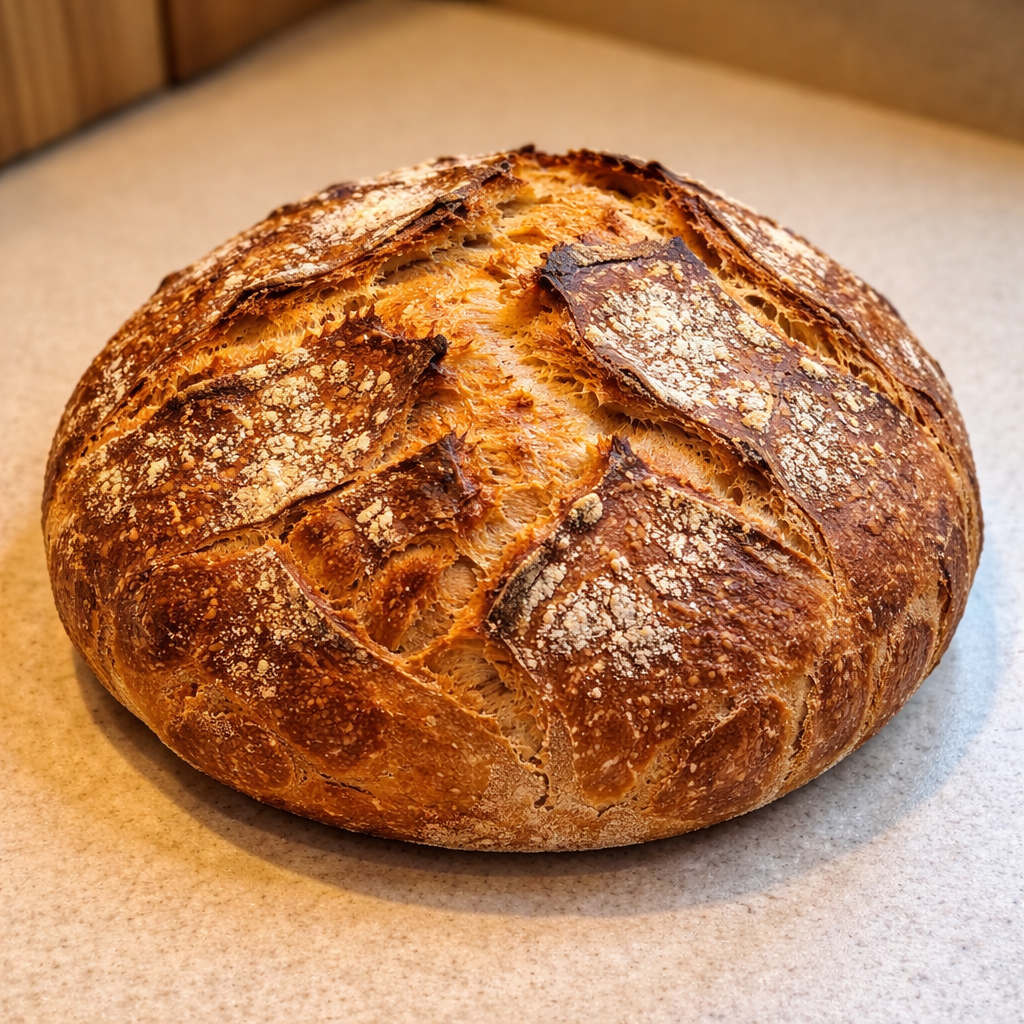
We live in a world where people are casually making laminated croissants on a Tuesday and I’m over here celebrating that my dough didn’t glue itself to the counter. Which is why this no knead Italian artisan bread feels like a tiny, gluten-based protest against hustle culture. No stand mixer. No 27-step starter. Just… a bowl, time, and some faith. And maybe a backup snack in case it goes wrong, like those banana bread brownies, because I’ve learned to manage expectations.
The Time I Baked My No Knead Italian Artisan Bread Meteor
The first time I tried to make “simple rustic bread,” the recipe blog said things like “the dough will feel alive in your hands.” Mine felt like cold Play-Doh that had given up on life.
I remember the smell so clearly: not the warm yeasty heaven you imagine, but this weird combo of damp flour and… fridge? Like if a bag of all-purpose had anxiety. When it baked, it made this aggressive sizzling noise, like it was mad at me personally. The loaf came out looking like a pale asteroid—cracked in random places, heavy, a weapon more than a carbohydrate.
When I cut into it (sawed, really), it squeaked. Not an exaggeration. The knife scraped and the crumb compressed like packing foam. My husband, who will eat literally anything, took one bite and said, very gently, “Do we have jam?” which is Midwestern for “this tastes like sadness.”
Of course, did I give up? No. I doubled down. I watched 400 videos of people stretching silky dough and saying, “See, just like this,” while I stared at my sticky horror movie prop, wondering if mine needed therapy or more flour. Or less flour. Or a different bowl. Or a new personality.
There was one attempt where the dough climbed up my fingers and just… stayed there. I was clapping my hands over the trash can like I was trying to exorcise it. The dog was thrilled. My ego? Less so.
And I wish I could say that was the turning point, the big learning moment. It wasn’t. I just rage-closed every tab, ate a slice of toast from the grocery loaf, and pretended maybe I was never meant to bake bread at all.
When I Finally Stopped Trying To Impress The Dough
What finally worked was shockingly boring: I lowered my standards and stopped overcomplicating it.
There’s something sneaky about this no knead Italian artisan bread. It looks fancy, like you labored over it with a bench scraper and a deep sense of purpose, but emotionally it asks almost nothing of you. Which, frankly, is my type of relationship.
Practically, the big shift was this: I quit touching it so much. I let time do the work instead of my wrists and my ego. I mixed the flour, salt, instant yeast, and water into what honestly looked like a crime scene of sticky dough, muttered “this is never going to work,” covered the bowl, and walked away. For 18 hours. Like a responsible adult who suddenly remembered she has actual things to do and also a favorite show to rewatch.
Emotionally, it was weirder. I had to stop trying to “perfect” it and just let it be ugly at every stage. The dough is shaggy? Good. It spreads a little when you turn it out? Fine. It looks flat before baking? Whatever. It taught me to live with a tiny, controlled amount of chaos, which is huge coming from me, a person who has, at various points, alphabetized her spice drawer and then ordered takeout anyway.
Every time I make it now, there’s still a tiny whisper in my brain like, “This is the time it betrays you. This is the time it doesn’t rise.” But then I lift the lid off the Dutch oven, see that puffed, blistered crust, and I’m like, “Oh. I did that. Me. The girl who once forgot salt entirely and baked a loaf that tasted like wet cardboard.”
It works because the rules are simple and the expectations are low. And I think that’s my new religion.
What Actually Goes In This Thing
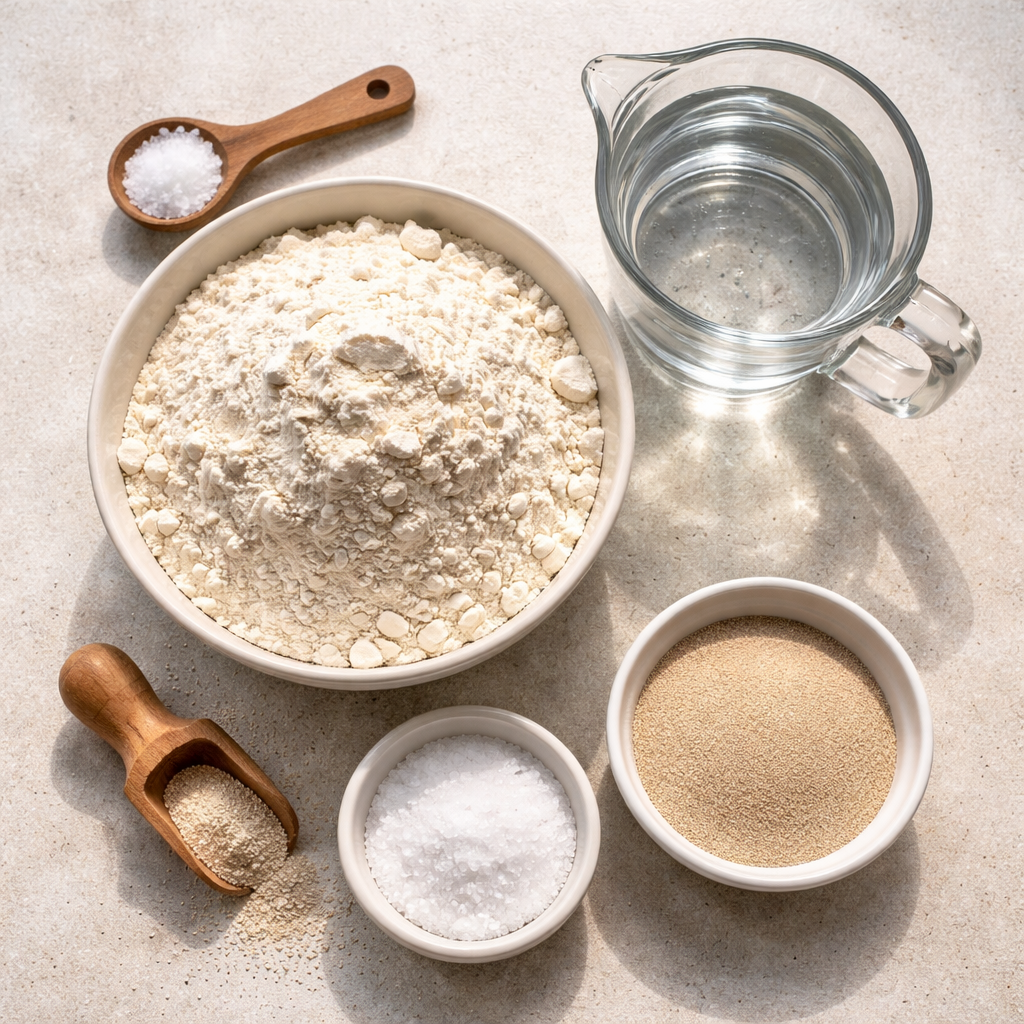
- 3 cups all-purpose flour
- 1 1/2 teaspoons salt
- 1/4 teaspoon instant yeast
- 1 1/2 cups water (room temp, not ice cold, not sauna hot, just… tap)
You can dress it up later with olive oil on the side, garlic, herbs, whatever, but this base is aggressively budget-friendly and unapologetically plain in that Euro-grandma way—like, “You want flavor? Put something on it.” The texture hits that chewy-center, crackly-crust lane without needing special flour or some mystical starter you feed like a pet, which leaves your grocery money free for, I don’t know, chocolate chips or the stuff for chocolate espresso banana bread. Priorities.
The Lazy-Girl Bread Ritual (In Nine Chaotic Moves)
- In a large bowl, whisk together the flour, salt, and yeast.
- Add the water and stir until a shaggy dough forms.
- Cover the bowl with plastic wrap and let it rise at room temperature for 12 to 18 hours, until the surface is dotted with bubbles.
- Preheat your oven to 450°F (230°C) and place a Dutch oven inside to heat.
- Turn the dough out onto a floured surface and shape it into a ball.
- Let it rest for 30 minutes.
- Carefully remove the hot Dutch oven, place the dough inside, cover with the lid, and bake for 30 minutes.
- Remove the lid and bake for an additional 15-20 minutes until golden brown.
- Let the bread cool on a wire rack before slicing.
And NOW, the reality version: the dough will look like something you’d apologize for. That’s right. Perfect. If you can stir it with a spoon and it looks like a fuzzy beige swamp, you’re in the zone. When you dump it onto the counter, it might deflate and spread like it’s giving up—IT’S LYING. Just flour your hands, scoop it into a ball-ish situation, and call it character.
Also, preheating the Dutch oven feels annoying but is absolutely the main character here; it’s what gives you that bakery crust instead of “sandwich bread but trying its best.” If you forget the rest time? Honestly, I’ve done that and it was still fine. Not perfect, but very “I made bread and everyone is eating it with butter and nobody is filing a complaint,” which is all I want.

Meanwhile, In Your Actual Kitchen
Are you also trying to make this while answering emails and telling a tiny human to stop licking the refrigerator door, or is that just my Tuesday?
Because this is a rare recipe that survives real life. You can mix it up at 10 p.m. while you’re emotionally snacking on cereal. You can forget it until the next afternoon. You can realize you didn’t flour the towel enough and half the dough sticks, swear under your breath, peel it off, and it still bakes up like you meant to do that.
Tell me if this sounds familiar:
You pull it out of the oven, the crust is doing that soft crackling sound, everyone mysteriously wanders into the kitchen like they smelled something from three counties away, and suddenly you’re slicing into it too early because patience is for people who don’t have warm bread on the counter.
And yes, you burn your fingers a little. And yes, it squishes slightly because you didn’t wait for it to cool properly. But then you’re standing there, eating torn-off pieces dipped in olive oil over the sink like an Italian raccoon, and thinking, “Oh. This is why people bake.”
If you have leftover slices (you won’t, but hypothetically), it makes the kind of toast that doesn’t even need toppings—but we’re putting toppings on it anyway because we are not minimalists. Also, this bread with peanut butter and honey right before a busy day? Almost as effective as those easy no bake energy balls, but with more emotional satisfaction.
Questions You Are Absolutely Allowed To Ask
Yes, you rebel. Just whisk it into the water first and let it sit for about 5–10 minutes until it looks foamy and alive, then add that to your flour and salt. The rise time might be a tiny bit different, but this recipe is honestly very forgiving, like a grandma who pretends not to notice you measuring wrong.
You’re fine. Use a heavy oven-safe pot with a lid, or even a deep casserole dish covered tightly with foil. The whole point is trapping steam so the crust can do its dramatic glow-up. Is it exactly the same? No. Is it still absolutely worth eating half the loaf in one sitting? Yes.
Kind of annoyingly sticky. If you can roll it around like a neat little rubber ball, it’s too dry. It should cling to the spoon and your fingers enough to make you question your life choices, but still come together when you coax it with flour on the counter.
Yes, and you should, once you’ve made it plain at least once so you know how the dough behaves. Stir in dried herbs with the flour, or gently fold in shredded cheese during shaping. Garlic can burn, so I like serving it roasted on the side instead of baking it in—but listen, if you want to live dangerously, I support that.
On the counter, wrapped in a clean towel or paper bag, about 2 days before it starts crossing into “meh.” Toast resurrects it pretty well. After that, freeze slices and pop them in the toaster straight from the freezer. If it makes it that long in your house, please teach me your ways.
I think the thing I love most about this bread isn’t even the bread. It’s the proof (sorry) that you can be wildly imperfect, forgetful, a little chaotic, and still pull something golden and beautiful out of the oven that makes people go quiet for a second when they take a bite.
It’s not a flex, it’s not an identity, it’s just flour and water and time—doing their thing while you go live your life, or doomscroll, or have a small meltdown on the kitchen floor. And then a few hours later you remember, “Oh right, there’s dough,” and somehow it’s turned itself into something better while you weren’t looking, which feels… weirdly hopeful?
Anyway, I was going to say something profound here about carbs and softness and letting things rise in their own time, but the timer just went off and the crust is crackling again and now I’m just standing in the kitchen, tearing off the heel of the loaf with my bare hands like a raccoon with a college degree and—
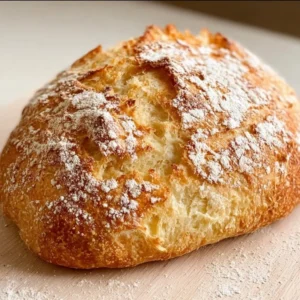
No Knead Italian Artisan Bread
This no-knead Italian artisan bread is simple to make and requires minimal effort. It yields a crusty loaf with a chewy center that will impress your friends and family.
Ingredients
Main Ingredients
- 3 cups all-purpose flour
- 1.5 teaspoons salt Adjust to taste
- 0.25 teaspoon instant yeast
- 1.5 cups water Room temperature, not hot, just tap water
Instructions
Preparation
- In a large bowl, whisk together the flour, salt, and yeast.
- Add the water and stir until a shaggy dough forms.
- Cover the bowl with plastic wrap and let it rise at room temperature for 12 to 18 hours, until the surface is dotted with bubbles.
Baking
- Preheat your oven to 450°F (230°C) and place a Dutch oven inside to heat.
- Turn the dough out onto a floured surface and shape it into a ball.
- Let it rest for 30 minutes.
- Carefully remove the hot Dutch oven, place the dough inside, cover with the lid, and bake for 30 minutes.
- Remove the lid and bake for an additional 15-20 minutes until golden brown.
- Let the bread cool on a wire rack before slicing.
Notes
The dough may appear shaggy and sticky, but this is expected. Preheating the Dutch oven is crucial for achieving a perfect crust. This bread pairs well with olive oil or toppings of your choice.